Episode 18 · Duration: 11:43
About this episode
Episode Summary:
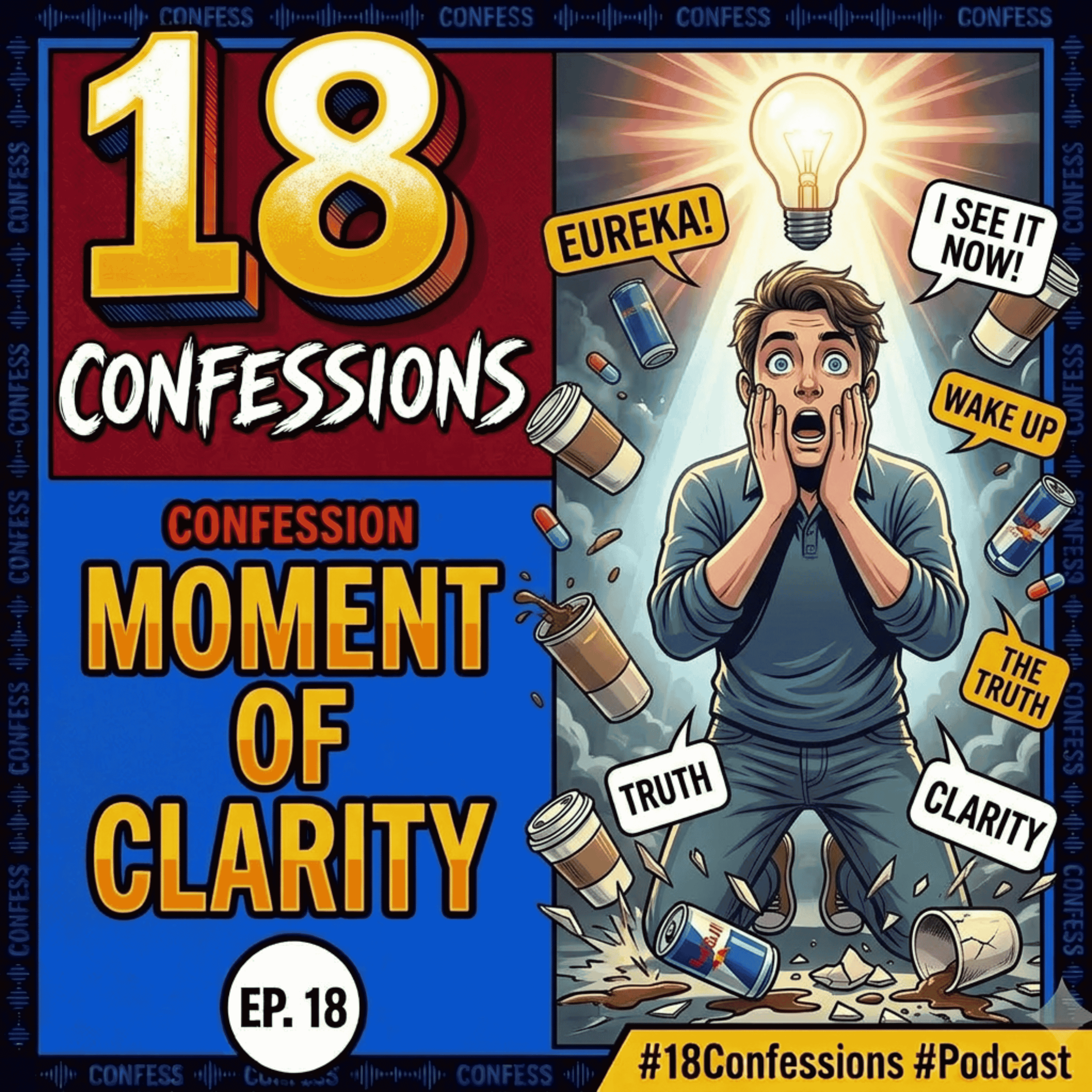
For nearly 20 years, caffeine was the silent and dangerous mask for a serious, hidden medical issue. Starting at just seven years old with a morning routine of soda to fight unexplained fatigue, this individual spent decades continuously escalating their chemical dependence to include high doses of stay-awake pills and coffee just to function on a daily basis. This confession exposes the frightening lengths we go to hide physical exhaustion, the extreme danger of using legal stimulants to override structural warning signs, and the transformative clarity that arrives when you finally commit to a clean, chemical-free life.
What You'll Hear in This Episode
- How a mother’s choice to replace breakfast and lunch juices with sodas initiated an early childhood caffeine addiction.
- The shocking diagnosis of Hodgkin’s disease (lymphoma) after a childhood spent blindly masking extreme lethargy with stimulants.
- The powerful psychological grip of athletic commercial endorsements convinces young athletes that a severe crash is simply a "deficiency" of the drug.
- The highly disruptive college routine of setting an alarm to swallow caffeine pills an hour before waking up just to artificially trigger the heart and bladder to force the body out of bed.
- How a massive physical tolerance forced an escalation from single pills to an extreme routine of multiple pills and daily coffee pots.
- The painful consequences of operating in a highly "juiced up" state, including severe kidney aches, permanent dehydration, and deeply strained relationships with loved ones.
- The life-changing moment a specialized research study revealed that a decades-long hormonal imbalance had been systematically missed by doctors and hidden by daily caffeine use.
Key Takeaways
- Relying heavily on daily caffeine can dangerously camouflage severe, undiagnosed systemic health problems and diseases for decades.
- Stimulant tolerance builds up rapidly, inevitably pushing consumers away from casual sodas and toward highly concentrated forms of the drug like pills and heavy coffee.
- The short-term energy surge induced by artificial tracking is an illusion that often leaves the underlying body completely dehydrated and physically damaged.
- Aggressive behavior, annoying personality shifts, and extreme irritability are direct mental complications of operating under heavy chemical stimulation.
- Breaking free from a long-term chemical crutch requires a complete lifestyle overhaul centered on total caffeine elimination, clean nutrition, and structured physical exercise.
Who Should Listen
- Anyone who relies on coffee, energy sodas, or over-the-counter stay-awake tablets to get out of bed or survive a standard daily routine.
- Individuals dealing with persistent, daily exhaustion who have never investigated if their constant caffeine habits are actually causing the fatigue.
- People experiencing physical stress markers like unexplained kidney pain, dehydration, or rapid heart rates while downing everyday stimulants.
- Cancer survivors or anyone managing long-term recovery who wants to understand how a complete physical reset can genuinely uncover their true self.
Resources & Links
🌐 Visit us at https://linktr.ee/UnwiredLife
📖 Confessions of a Caffeine Addict by Marina Kushner
📩 Share your own caffeine confession: https://linktr.ee/UnwiredLife
🛒 Live Unwired Merch: LiveUnwired.org
Transcript
I soon lost the taste for soda, which was an indication that I was using it only for the caffeine. It was strictly a chemical dependence. I would be in a holding pattern determined by caffeine for years. It was as hard to wake up in college as it had always been in my life before, so I came up with a routine. I would set an alarm 1 hour before the time when I needed to be awake and put a bottle of water and caffeine pills next to my bed. Listen, we all talk about the grind, but most of you are subsidizing your hustle with a chemical loan you can't pay back. In this new series, Unwired, we aren't just talking theory. We're going into the dirt with 40 anonymous stories of people who thought they were using caffeine to be superheroes, only to realize it was the very thing dismantling their health and their marriages. This is the case study of the hidden tax on your ambition. Hey everyone, Al Kushner here, and welcome back to the Live Unwired podcast. Today we are looking at a story about a person who used high doses of soda and caffeine pills to mask chronic exhaustion for nearly 20 years. Starting in childhood, they relied on caffeine to push through fatigue, sports, and even cancer treatments, eventually taking multiple pills just to function. It turned out their lifelong sleepiness was actually a hormonal imbalance that the caffeine was hiding all along. This narrative can show how easily we use stimulants to cover up underlying health issues instead of actually fixing them. I highly encourage you to look at whether your daily intake is masking what your body really needs. Moment of clarity. Stimulants, legal or illegal? Pick your poison. Anything that alters the brain, especially on a regular basis, cannot be good. However, some stimulants are deemed acceptable by society, and caffeine is the main drug of choice. For most, it is the only way to make it through the day. I have been one of that crowd. Caffeine dug its claws into me when I was young, practically ruining my life. I remember at age 7 being a sleepy kid and having some difficulty waking up for school. My mother would give me a Coca-Cola with my breakfast. It was the beginning of the end. This one-time pick-me-up became a ritual, and my lunchtime juice was replaced with Coca-Cola. Eventually, it took a lot more than one can at a time to get the buzz. I was in heaven because soda tasted fantastic, and I was allowed as much as I wanted. I did not even eat without having a soda to accompany the meal. It was obvious that my sleepiness indicated some kind of disorder, and by masking it with caffeine and letting it go untreated, it would have serious consequences. Turned out that I had Hodgkin's disease—lymphoma—and by the time the disease was discovered, no one was sure how long I'd had it. It was not normal that a child of 11 by then was always sleepy and unable to make it through his day without high doses of caffeine. However, I can only say this with hindsight. At that time, my caffeine intake was steadily increasing in an attempt to combat increased sleepiness from the chemotherapy. The constant consumption of Coca-Cola was being used throughout the day to keep me going and to hold my nausea at bay. And there was no indication to anyone that Coca-Cola was serving no purpose and was probably doing much more harm than good. The information about caffeine wasn't readily available for the public as this time predated the internet. Despite my family's lack of knowledge about what was healthy and what was not, I battled cancer and eventually won. It seems that caffeine and poor nutrition have a tendency to go hand in hand. Caffeinated soda and chips or anything processed and high in calories seem to fit into an unhealthy lifestyle. The feeling of being sluggish that comes from eating bad food can only logically be combated with a high dose of caffeine. Children were considered immune to the consequences of a bad diet. And the marketing of highly processed junk foods was often aimed directly at children because they are susceptible to advertising persuasion like no other age group. From a young age, I was a highly competitive junior tennis player, and caffeine played its nasty little role in that part of my life as well. Instead of drinking water, I would drink caffeinated sodas during competition. The campaigns that went on during the Cola Wars in the '80s featured people that I looked up to. and many athletes were portrayed as being able to accomplish the things they were doing because they drank Coke or Pepsi. It seems ridiculous when I look at this as an adult. As a teen, it was not much of a stretch to believe that the high that I felt made me superhuman, and the crash was not because of the caffeine, but because of a lack of caffeine. So I played tournaments and went to camps, drinking soda before, during, and after matches. I did not realize I was hindering myself because I was doing well. However, my success could have been greater without the caffeine habit. At that time, I was able to justify my losses and rationalize my failures, so it did not occur to me that the caffeine habit was a bad habit. My sleepiness continued to follow me as I aged, and caffeine continued to regulate my energy level. I graduated from high school and went to college, discovering NoDoz, Vivarin, and their generic counterparts. I thought I died and gone to heaven. I did not realize that these pills would place me in purgatory. Taking a pill was easier than downing ounce after ounce of carbonated liquid. I could get the jolt I needed without soda, which meant I no longer had to suffer from the way my teeth felt or from the bloating in my stomach. I soon lost the taste for soda, which was an indication that I was using it only for the caffeine. It was strictly a chemical dependence. I would be in a holding pattern determined by caffeine for years. It was as hard to wake up in college as it had always been in my life before, so I came up with a routine. I would set an alarm 1 hour before the time when I needed to be awake and put a bottle of water and caffeine pills next to my bed. When the alarm rang, I quickly swallowed a pill and fell back asleep for an hour. Over that time, one or two things would happen. My heart would begin racing and I would wake up, or I would have an urgency to urinate or have a bowel movement. As a result, I would jump out of bed. Only problem was that over time, one 200mg caffeine pill would not work, so I would take two. Then two would stop working and I would take an additional two. I would take another pill before going to class and afterwards crash and go back to sleep. Then I would take a pill or two more in the afternoon to make it through until nighttime. My caffeine tolerance was gradually increasing. It did dawn on me that this was not a great way to live. I decided that during my college breaks I would ease off caffeine. I would stop cold turkey, sleep as much as I wanted, and drink gallons of water. Then the break would end and I would have to resume a regular caffeine schedule. For a while, I'd hope that one pill would do the trick. Then I would take two. I would see myself going down the same path. This continued throughout college. My life was a constant battle to stay awake and function, so I could not quit consuming caffeine completely. In retrospect, I also saw that caffeine had a tendency to make me obnoxious. Mm-hmm. I was juiced up, and my clownish nature gave me an annoying presence at times. I believe it hurt my relationship with my friends and family. After college, I eased into a steady work schedule, but caffeine continued to control the way I felt. I struggled to maintain a normal routine. I was always tired and felt weak. So, I supplemented the caffeine pills with coffee. My caffeine intake increased rapidly. This did bother me, but the sleepiness bothered me more. I could have a caffeinated beverage right before bed and fall asleep, no problem. Some days I'd sleep what is considered to be a lot and not feel awake. I was sleepy during car rides. I had to urinate constantly. Sometimes my kidneys ached and I was dehydrated. My life was hell, but I was addicted to something that is not considered a big deal. That is how I tried to justify it. What else could I do? Years went by and I continued down this path. One day I was invited to participate in a cancer research study at the hospital where I was treated as a youth. I went begrudgingly because even though I realized it was for a good cause, I still hated going to doctors. Since my illness, every time I go to the doctor there is drama, even though the tests show that I'm cleared and there is really no problem. Doctors are paranoid when it comes to someone who has historically been seriously ill. However, I decided to go. I was tested, prodded, poked, and it was unpleasant. Turns out that my sleepiness, missed for almost 20 years by countless doctors, Despite my complaints that I am really tired all the time, was a result of my hormones that were out of whack. This imbalance was the reason for my sluggishness and overall exhaustion. I had been suffering all these years, compensating with caffeine and masking a serious health issue. After pondering and reflecting, I had a moment of clarity. I would get the treatment that I needed and I would change my lifestyle. No more caffeine. Only water, water, and more water. No more fast food for me. I would exercise, weight training, stretching, cardio, everything. It is the only way to be healthy. That wraps up this episode of Live Unwired. I think this story really highlights how we can use caffeine to cover up what our bodies are actually trying to tell us. For nearly 20 years, this person popped caffeine pills and drank soda just just to get through the day, completely missing a serious hormonal imbalance. When you constantly rely on stimulants to mask your exhaustion, it can delay getting the real medical help you might need. I suggest trying a weekend with zero caffeine just to see how your baseline energy actually feels without the artificial boost. If you made it this far into the truth about caffeine, you already know this isn't just about coffee. It's about your nervous system, your sleep, your anxiety, and your life. If you don't want to do this alone, that's why I built Unwired. Inside the Unwired app, you can log your last caffeine use, track withdrawals, sleep, mood, and energy over days and weeks. See your own nervous system reset instead of hoping it's working. And get matched with a coach for one-on-one training so you're not white-knuckling this by yourself. Alongside that, the Unwired Podcast walks through 40 real caffeine case studies. People who went from just coffee to energy drinks and pills and then back out. You'll hear their mistakes, relapses, and what actually worked. Both links are at the top of the description. Join the Unwired app waitlist for coaching and tracking. Listen to the Unwired Podcast. Save this audiobook, send it to one person who needs it, And if you're stuck in that daily 2:00 PM crash, come do this with us inside Unwired, not just in your head.