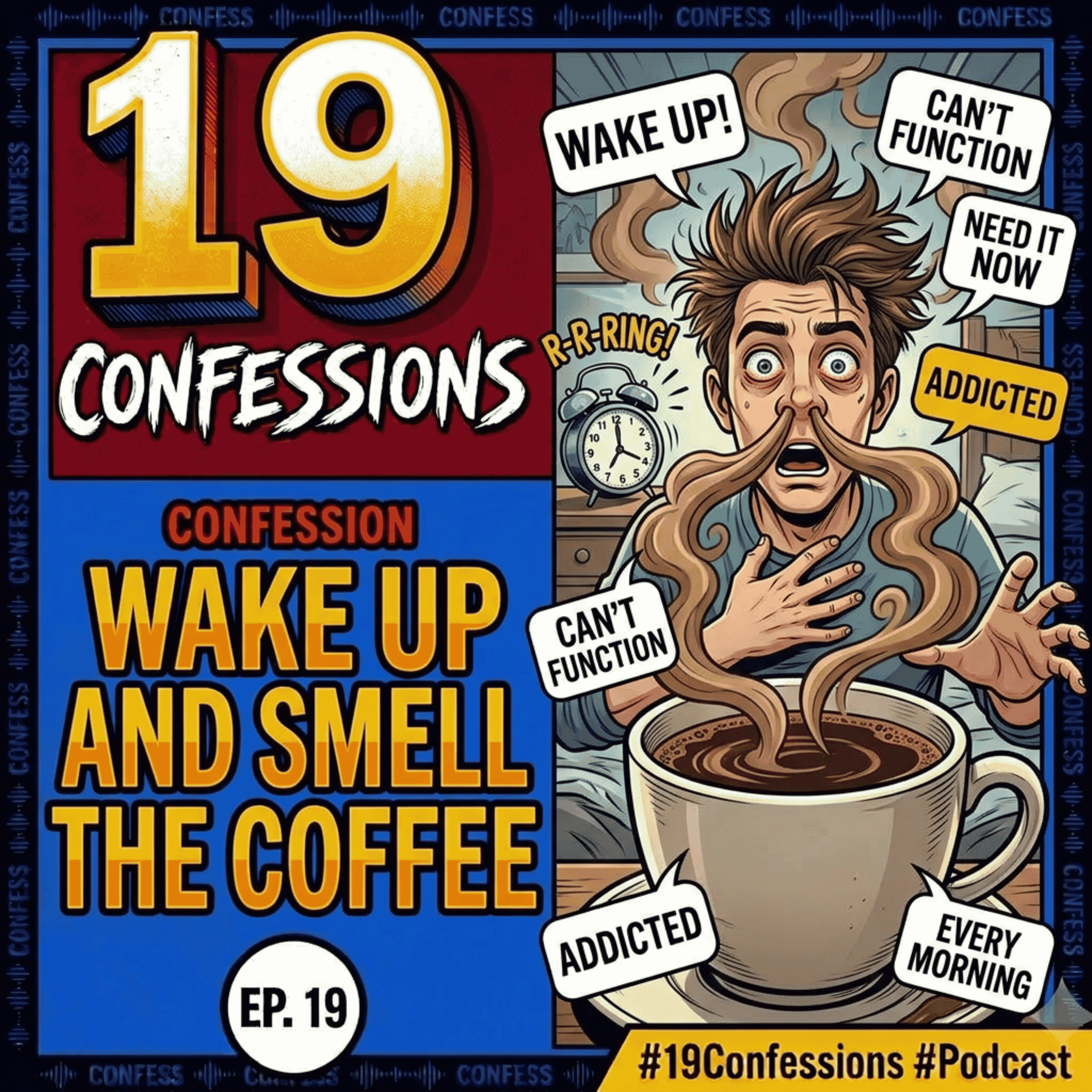
Episode 19 · Duration: 18:05
About this episode
Episode Summary
For a woman who associated the rich aroma of brewing coffee with the warmth and security of her childhood family, a seemingly innocent habit eventually transformed into a powerful psychological crutch. Her dependence escalated into adulthood, masking the intense underlying isolation of a dysfunctional, drug-addicted marriage and a severe battle with postpartum depression and agoraphobia. This confession is about deep emotional attachments to everyday stimulants, the subtle ways they can worsen a personal crisis, and the profound clarity that arrives when you finally drop the chemical crutch to reclaim your emotional well-being.
What You'll Hear in This Episode
- How an innocent ritual of sharing morning coffee with parents was initiated at just eight years old.
- The steady progression from high-quality college espresso blends to an adult routine marked by high-strung, overextended behavior.
- The reality of a toxic marriage where a husband's street-drug habits were protected by a mutual agreement to ignore each other's addictions.
- The miserable initial "week of hell" spent attempting to quit together, resulting in crushing headaches and immediate relapses.
- How ignoring a physician's explicit advice to eliminate prenatal caffeine resulted in a compromise of consuming a single 20-ounce cup daily.
- The debilitating onset of postpartum depression and severe agoraphobia, where keeping a fresh pot brewing was an attempt to chase the comfort of childhood memories.
- The critical role an outside friendship and an objective counselor played in forcing her to break the habit, start daily exercise, and "clean house".
- The true path to autonomy, where breaking a heavy dependence on caffeine provided the exact mental confidence needed to permanently leave a bad marriage.
Key Takeaways
- Deep family nostalgia can deceptively wrap an addictive drug in an illusion of absolute comfort and safety.
- Every day, stimulants can silently mask or severely worsen psychological conditions like postpartum depression and agoraphobia.
- Living with an active substance abuser can easily breed silent agreements that keep both partners trapped in destructive cycles.
- Committing to structured daily exercise and heavy hydration can successfully buffer the body against intense physical withdrawal symptoms.
- Permanently stepping away from a chemical crutch can completely restore natural sleep cycles, level out high-strung nerves, and return true life clarity.
Who Should Listen
- Anyone who relies on a warm cup of coffee as an emotional security blanket to handle personal isolation or high-stress environments.
- Mothers battling severe anxiety or postpartum struggles who find themselves continuously dependent on daily pots of coffee to survive.
- Individuals caught in a highly dysfunctional marriage or family structure are using everyday fixes to ignore their reality.
- Anyone terrified of facing the intense physical pain of physical withdrawal who needs a proven, structured method to succeed.
Resources & Links
- 🌐 Visit us at https://linktr.ee/UnwiredLife
- 📖 Confessions of a Caffeine Addict by Marina Kushner
- 📩 Share your own caffeine confession: https://linktr.ee/UnwiredLife
- 🛒 Live Unwired Merch: LiveUnwired.org
Transcript
I started drinking coffee when I was 8 years old. First, I would steal a sip or two from my parents' cups when they weren't looking, just to see what it tasted like and to see what brought them together every morning. I found out quickly that I preferred my father's sweet and creamy coffee to my mother's black, unsweetened drink. Eventually, my parents bought me my own coffee cup, and I was invited to sit with them in the mornings and enjoy this wonderful brew. Listen, we all talk about the grind, but most of you are subsidizing your hustle with a chemical loan you can't pay back. In this new series, Unwired, we aren't just talking theory. We're going into the dirt with 40 anonymous stories of people who thought they were using caffeine to be superheroes, only to realize it was the very thing dismantling their health and their marriages. This is the case study of the hidden tax on your ambition. Welcome back to Live Unwired. Real stories from real lives transformed by one everyday drug most of us barely even question. This 19th confession is called Wake Up and Smell the Coffee. It begins in a house where a fresh pot is always brewing. The smell of roasted beans filling every room, coffee part of every gathering, and parents sharing their morning cups across the kitchen table before the day begins. It feels warm, safe, and deeply familiar. She starts sneaking sips from her parents' cups at age 8, preferring her father's sweetened, creamy version over her mother's sharp black brew. Eventually, they buy her her own cup and invite her to sit with them in the mornings. Nobody sees any harm in it. In college, coffee houses are having their moment. Espresso, cappuccino, café latte, She works her way through every option, learning the craft, chatting with baristas, and savoring that first brisk sip of each new drink. She visits daily, sometimes twice. The baristas know her order before she reaches the counter. Coffee is pleasure, identity, and community all at once. After college, working at a publishing company with a coffee bar in the lobby only deepens the habit. Afternoon runs downstairs. Chocolate-covered coffee beans at her desk, an office culture built around the daily brew. At the coffee house, she meets Jake, falls in love, and marries him, unaware that he's hiding his own addictions to street drugs and alcohol. Their marriage becomes a quiet negotiation between his dependencies and hers. When Jake challenges her to quit coffee, they try together for one week. It's miserable for both of them. He starts criticizing how much she spends on coffee, counting receipts, and checking bank statements while ignoring the money he pours into his own habits. She starts hiding her coffee purchases and paying cash. Eventually, she asks for a divorce and finds out she's pregnant. They stay together for the baby, but the tension doesn't leave. After their daughter is born, postpartum depression sets in, and she becomes agoraphobic, terrified to leave the house. Isolated except for the constant pot of coffee on the stove. Caffeine keeps her awake through the nights of freelance work and the long, lonely days at home, wired and frazzled while Jake tunes her out. A reconnection with an old college friend pulls her back into the world, and eventually, with a counselor's help, she gets the one instruction that changes everything: give up caffeine, start exercising, drink water. No substitutes, no half-measures. She's scared but follows through. The caffeine withdrawal is real, but exercise and hydration soften the worst of it. Within 2 weeks, she's sleeping normally, eating better, and thinking more clearly than she has in years. She puts her daughter in daycare, finds a job, and finally has the clarity and confidence to leave the marriage. Now, when she walks past a coffee stand and the aroma pulls at her, she remembers how far she's come and keeps walking. This episode is brought to you by Live Unwired, liveunwired.org, a community helping people reclaim natural energy, deeper sleep, and real peace of mind without leaning on stimulants. Liveunwired.org is the home base for this show and the gateway to 3 core resources from the Adrenal Foundation: The Truth About Caffeine, The Truth About Coffee, and Confessions of a Caffeine Addict: 40 True Anonymous Stories that inspired this series. Together, these 3 books give you the science, the lived experience, and the practical insight you need if you're ready to step out of the burnout loop and explore life with less, or no, caffeine. And if you recognize yourself in the edges of this story, you'll find support waiting at liveunwired.org. Now, settle in for Confession 19: Wake Up and Smell the Coffee. Wake up and smell the coffee. I grew up in a house where a fresh pot of coffee was always brewing. The smell of the roasted beans permeated the house as the coffee dripped in the coffee maker, and it created a warm, welcoming environment. Whenever we had company, everyone always accepted a cup. It was just a part of my mother's way of offering hospitality. My mother and father would sit together every morning and share conversation over their cups of coffee. It seemed to bring them together, even if it was only for that short hour before my father went to work each day. I started drinking coffee when I was 8 years old. First, I would steal a sip or two from my parents' cups when they weren't looking, just to see what it tasted like and to see what brought them together every morning. I found out quickly that I preferred my father's sweet and creamy coffee to my mother's black unsweetened drink. Eventually, my parents bought me my own coffee cup, and I was invited to sit with them in the mornings and enjoy this wonderful brew. They didn't see any harm in it, and it was nice to sit together as a family and share conversation or just enjoy the morning's peacefulness. During my college years, I used coffee, caffeine gum, and soda to keep myself awake to stay up late and study. At that time, coffee houses and drive-through coffee huts were becoming popular, and I was introduced to high-quality, bold roasted coffee. Espresso, cappuccino, café latte. I acquired a taste for stronger, higher-quality brews with each drink I tried. I loved the experience of smelling the coffee beans while they were being ground and then brewed. I enjoyed watching the baristas carefully creating artistic designs in the froth. I envied their skills and learned a lot about brewing just by talking with them as they worked. I savored the first brisk sip of coffee and felt warmed by the potion that was my drink. I began visiting the local coffee hangouts every day, sometimes more than once a day. I suffered a few nights when I couldn't sleep, but I loved how alert I became with each cup. I could be in a rotten mood and turn it around in less than 5 minutes with one cup of coffee. I was becoming an addict. In a harmless way. Or so I thought. After I finished college, I was hired by a large publishing company and worked long shifts writing for and producing various local newspapers. It was a fulfilling job, and when the company CEO installed a barista in the lobby of our building, that only made the job sweeter. My coworkers and I would rotate the job of coffee gofer every morning, and I would sneak down for my own cup in the afternoons. Sometimes followed by a handful of chocolate-covered coffee beans. Mmm. During one of my visits to the local coffee house, I met a man. Unbeknownst to me, he had his own addictions— street drugs and alcohol. We were married. I had never been one to experiment with drugs or alcohol, so I didn't understand his dependence, and I pressured him to get over it. I thought he could kick the habit, and when he tried, he was irritable and despondent. He said that he felt like a failure when he fell short of my expectations, so I stopped urging him to quit. Often he chided me for all the coffee I drank and challenged me to stop drinking it. I told him that I would quit if he would kick his habits, so we tried together. It was the most miserable week of my life. I had such terrible headaches that I couldn't see straight. I couldn't deal with my husband and he couldn't deal with me. We were both in serious withdrawal and we both quickly fell off the wagon. My husband started to bait me into arguments and criticize me over petty things. Not just the amount of coffee I drank, but what I ate, and how I dressed. He would count the money I spent on my coffee habit, although we didn't talk about the money he poured into his own addiction. I started to hide my bank card receipts from the local coffee shops, or just pay with cash when I could, and I evaded any conversation about how I spent my money. After much soul-searching, I decided to ask my husband for a divorce. It was bad timing. I found out that I was pregnant. We sat down and talked and agreed to work on our problems, stay together, and have the baby. We had an unspoken agreement to leave each other alone about our addictions, and we swept our problems under the rug. My pregnancy was difficult, and I was deflated when I had to quit my stressful publishing job. I was even more upset when the doctor told me to stay away from caffeine completely, including coffee, or else risk potential problems with my pregnancy. Quick pause for a second. If you're hearing yourself in this book, I built two things to go deeper than this audiobook can. First, there's Unwired, a caffeine cessation app where you can track your own withdrawal timeline, sleep, mood, and crashes day by day. And inside Unwired, you can work one-on-one with a coach who actually understands caffeine addiction and will walk you through a real plan instead of you guessing alone. The waitlist link is at the very top of the description. Second, there's the Unwired podcast built around 40 real caffeine case studies. Students, parents, founders, night shift workers walking through the same crashes you're hearing about right now. The link is right next to the app. If you want more than information, if you actually want a plan, a coach, and stories that feel like yours, hit those links, then come right back. After my daughter was born, I kept drinking coffee as usual and found that I had developed postpartum depression. I was alert, too alert, and hypersensitive to everything around me. I became agoraphobic and kept myself indoors, almost afraid to venture outside, even to go to the mailbox. My friendships dwindled away and I became reclusive and cut off from everyone except my husband and baby daughter. I had no calls from my old boss to come back to work and my husband did not support the option of going back, reminding me of the hours that I used to keep and how it would shortchange our child if I put her into daycare. I felt guilty, isolated, and helpless. I had inherited my mother's habit of always keeping a pot of coffee brewing throughout my day. While I was home watching my daughter. Having that pot brewing served several purposes. First, it helped me stay awake. I felt tired all the time, and caffeine helped perk me up and alter my moods. Second, it was comforting, as it reminded me of old times and of my mother and father sharing conversation and coffee. However, there was a distinct difference between the diner-style coffee that my mother made and the dark roasted espresso blend that I brewed. I had become a coffee snob and cringed at the thought of anything weaker than what I had become accustomed to drinking. As I drank my first cup in the morning, I often thought back to the closeness my parents had and realized how distant my own marriage felt. By the time my day ended and my husband came home from work, I was so high-strung from all the coffee I had imbibed that I felt like I was bouncing off the wall. I was alert while he was tired from his day work. He became irritated with me and with my longing for adult conversation, so he shut me out and hid away with his preferred addictions, ignoring me for the entire evening. Most weekends, he left me alone with our daughter and went out with coworkers or to find more drugs. In order to bring in extra income, I stayed up most nights working on various freelance projects which I could not work on during the daytime when I focused on my daughter. Often I would find myself brewing a new pot of coffee after my family went to bed. I was depriving myself of sleep at night and a social life during the day. One day I received email from an old college friend. She wanted to get together and catch up on old times from our college days. I felt anxious about meeting someone whose life was probably much more successful than mine. I was a mess. I felt like a mess and I looked like one. I gathered up my courage and met her at a local coffee shop. The venue was her suggestion. After meeting with her a few times, I started to feel better about venturing out on social calls. My husband did not like that I left our daughter with a babysitter, but I felt compelled to get out of the house, so I went against his wishes. My friend could see how reclusive I had become and suggested I see a counselor. At first, I felt criticized, but after she pointed out how dysfunctional my life had become, seeing a counselor seemed like a good idea. With her help and prodding, and without my husband's knowledge, I found a local counselor. After breaking 3 appointments, I finally forced myself to go. The counselor listened to the details about my life, then told me that I needed to clean house and get my life in order and in balance. First thing she said was to give up my addiction to caffeine and start exercising every day. She told me to avoid replacing coffee with some other form of caffeine. I was scared. She was, in essence, telling me to give away my comfort, my crutch. I would need to start drinking more water. I hated the thought of doing that. I hesitated, but she told me to give it a week and see how I felt. I remembered that week of hell when I had tried to quit previously, but I followed her instructions and started exercising. By exercising and drinking water, I avoided the worst of the withdrawal symptoms. Once I stopped depending on caffeine to help me stay up later, I began sleeping more normally and eating more healthfully. Within 2 weeks of this new routine, I knew what I needed to do for myself, and I put my daughter into daycare and found a job outside my home. Nowadays, I can walk by a coffee stand, and when I smell the aroma of the brew, it brings back memories both good and bad. Sometimes I even feel the urge to buy a cup. Then I remember my progress away from that chemical crutch, and I keep walking. That wraps up this episode of Live Unwired. I think this story perfectly illustrates how a seemingly innocent caffeine habit can seriously impact your mental health. It took professional counseling for her to finally realize that her daily espresso blends were feeding her severe anxiety and agoraphobia. Once she broke through the withdrawal and stopped relying on that chemical crutch, her sleep normalized and she gained the clarity to completely rebuild her life. For some people, stepping away from stimulants is the necessary first step to reclaiming their emotional well-being. I suggest paying close attention to how your mood shifts after your morning cup to see if it is doing more harm than good. If you made it this far into The Truth About Caffeine, You already know this isn't just about coffee. It's about your nervous system, your sleep, your anxiety, and your life. If you don't want to do this alone, that's why I built Unwired. Inside the Unwired app, you can log your last caffeine use, track withdrawals, sleep, mood, and energy over days and weeks. See your own nervous system reset instead of hoping it's working. And get matched with a coach for one-on-one training so you're not white-knuckling this by yourself. Alongside that, the Unwired podcast walks through 40 real caffeine case studies. People who went from just coffee to energy drinks and pills and then back out. You'll hear their mistakes, relapses, and what actually worked. Both links are at the top of the description. Join the Unwired app waitlist for coaching and tracking. Listen to the Unwired podcast. Save this audiobook, send it to one person who needs it, and if you're stuck in that daily 2:00 PM crash, come do this with us inside Unwired, not just in your head.