Episode 10 · Duration: 16:22
About this episode
He thought Stephen King got over cocaine. He just drank coffee.
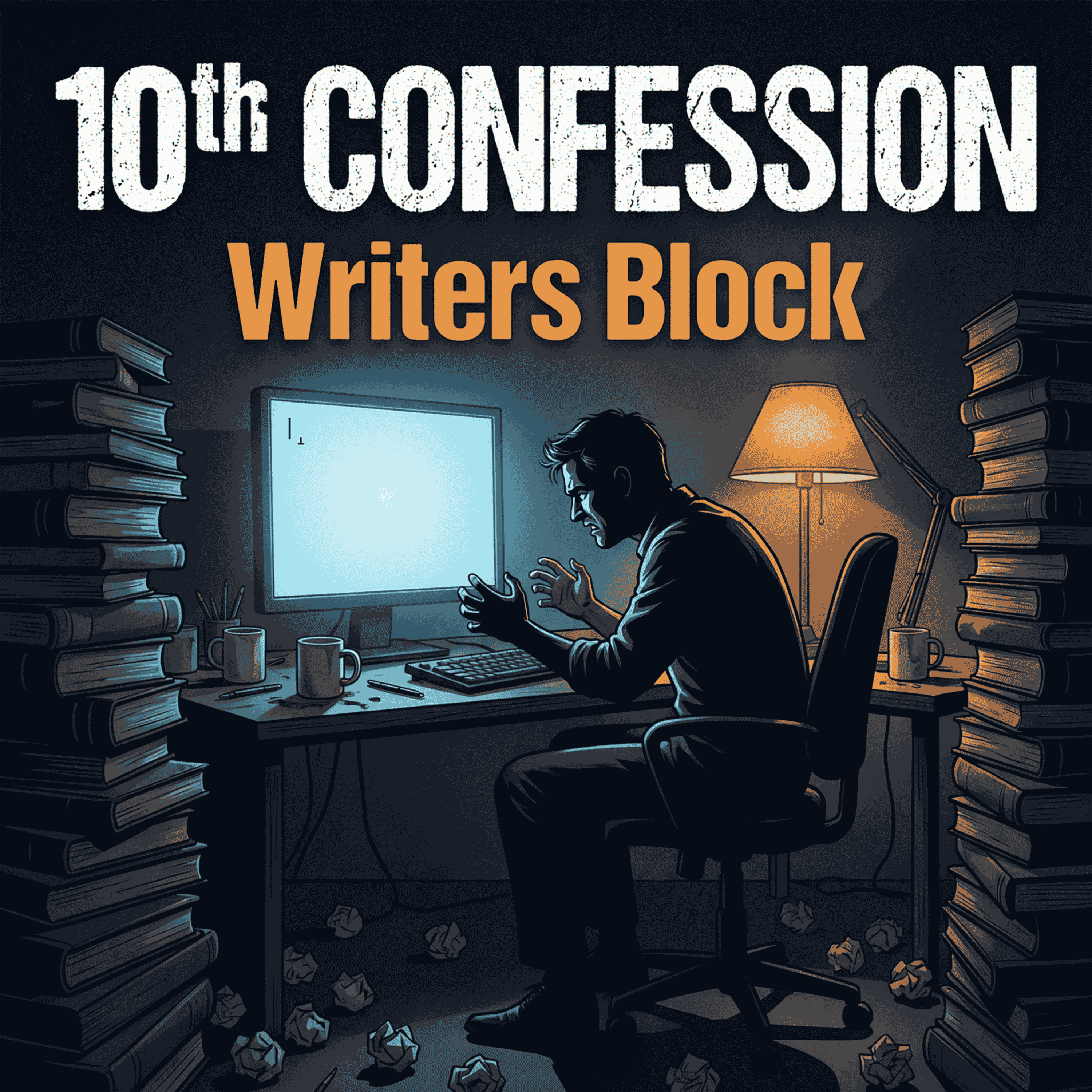
This is the confession of a writer who couldn't write without caffeine — or at least that's what he told himself for years. Four dollars a day at Dunkin' Donuts. Eight cups at Denny's, scribbling on legal pads. Friends who mocked him the moment he ordered hot chocolate instead. A girlfriend who believed in him. And a blinking cursor on a blank screen that became the most terrifying thing he had ever faced — sober.
He tried to quit three times. The headaches were brutal. The disorientation was real. The withdrawal peaked at 48 hours and nearly broke him every single time. But it wasn't the physical pain that kept pulling him back.
It was the page.
Without caffeine, the words stopped coming. Or so he believed. His friends rated his caffeine-free writing somewhere between "unnerving" and "get help." His identity as a writer was so tangled up with his identity as a coffee drinker that he couldn't tell where one ended and the other began.
Then one month without writing anything. Then one line. Then a poem. Then another. Then the most rewarding experience of his life.
Turns out the caffeine wasn't fueling the creativity. It was blocking it.
What You'll Hear in This Episode
- How caffeine became the psychological crutch behind an entire creative identity
- The brutal reality of withdrawal — vision problems, disorientation, headaches that bent him double
- The social pressure to keep drinking — from waiters, friends, and an entire culture that treats quitting like a betrayal
- The terrifying moment of staring at a blank screen with nothing to write and no cup to reach for
- How he finally broke through — and what came out on the other side surprised everyone, including him
Key Takeaways
- Caffeine doesn't just create physical dependency — it creates psychological dependency tied to identity and creativity
- Withdrawal peaks around 48 hours — knowing that can be the difference between quitting and caving
- Social environments actively punish people who try to quit — even friends and waiters become obstacles
- The creativity you think caffeine is giving you may actually be creativity that caffeine is suppressing
- Breaking the cycle opens up something deeper, cleaner, and more authentically yours
Who Should Listen
This one is for every writer, artist, musician, coder, or creative professional who believes they can only do their best work with a cup in their hand. If your identity and your caffeine habit have become the same thing — this confession will shake something loose. It's also for anyone who has tried to quit and been mocked, dismissed, or made to feel weak for even attempting it. You are not alone. And you are not crazy for trying.
🌐 Visit us at https://linktr.ee/UnwiredLife
📖 Confessions of a Caffeine Addict book
📩 Share your own caffeine confession: https://linktr.ee/UnwiredLife
🛒 Live Unwired Merch: LiveUnwired.org
Transcript
I'm not exactly Batman in the willpower department, so withdrawal was a big block for me. There was also some light peer pressure from my friends, but my biggest problem was I thought I couldn't write without caffeine. At first, I wanted to quit because a $4 cup of coffee every morning was killing my wallet. A large cup of coffee with a shot of espresso from Dunkin' Donuts comes to around $3. With tip, I was spending about $112 a month, so I stopped buying it. The first day I felt dizzy, tired, and achy, but I figured it was probably a bad night's sleep. Second day, putting inventory on shelves hurt my arms. I had trouble walking in a straight line, and my vision seemed limited to a thin cone. Listen, we all talk about the grind, but most of you are subsidizing your hustle with a chemical loan you can't pay back. In this new series, Unwired, we aren't just talking theory. We're going into the dirt with 40 anonymous stories of people who thought they were using caffeine to be superheroes, only to realize it was the very thing dismantling their health and their marriages. This is the case study of the hidden tax on your ambition. Welcome back to Live Unwired. I'm Al Kushner, and you're listening to the podcast that goes where nobody else wants to go. Into the honest, uncomfortable, sometimes devastating truth about what caffeine is really doing to our lives. Today's confession is personal for me, not because I've lived this exact story, but because I know this feeling. I think a lot of you do too. You sit down to do the thing you love. Maybe it's writing, maybe it's designing, maybe it's coding, painting, planning, building. Whatever that thing is that makes you feel most like yourself, And before you even open the laptop, before you even pick up the pen, you reach for the cup. Not because you're tired. Not even because you want it. Just because that's what you do. That's the ritual. That's the signal your brain has been trained to receive that says, "Okay, now we can begin." What happens if that cup isn't there? That's the question today's confession forces us to answer. And I'll warn you right now, the answer is not what he expected. It's not what I expected, and it might not be what you expect either. Today we're hearing from a writer, a real one, not someone who dabbles on weekends, someone who fills legal pads at Denny's between his 4th and 8th cup of coffee, someone whose friends knew his drink order by heart, someone whose entire creative identity was built on the foundation of a caffeinated habit he never once questioned until the money ran out. That's what started it. Not a health scare. Not a doctor's warning. Not a relationship falling apart. $4 a day at Dunkin' Donuts was killing his wallet, and that was the only reason he tried to quit. The first attempt was brutal. Vision narrowed to a thin cone, headaches that would have kept a weaker man in bed, disoriented so badly that he could barely walk a straight line at work. He made it to lunch. Then he ran to Dunkin' Donuts and never looked back. The second attempt, he ordered a hot chocolate at Denny's instead of coffee. You would have thought he'd committed a crime. His waiter made a comment, his friends piled on, the jokes were cruel. He had a caffeine withdrawal headache, felt groggy, and sat there being made to feel like an outsider for simply trying to take care of himself. He left early that night. The third attempt, He made it. But the cost was almost more than he could bear. Because when he finally sat down to write without caffeine, nothing came. The cursor blinked at him. Empty. Mocking. Demanding. And the only thought in his head was, "Make a pot of coffee." He convinced himself that caffeine was the source, that without it, the words didn't exist. That the creativity lived inside the cup and not inside him. That belief, that one quiet, devastating lie, kept him hooked longer than any headache ever could. What breaks that lie? What happens when a writer finally writes clean? You're about to find out. And I'll just say this before we get into it: if you have ever told yourself that you need something outside of yourself to access the best version of yourself, this one is going to hit differently. Let's go. Writer's block. I tried to quit caffeine a few times. I'm not exactly Batman in the willpower department, so withdrawal was a big block for me. There was also some light peer pressure from my friends, but my biggest problem was I thought I couldn't write without caffeine. At first, I wanted to quit because a $4 cup of coffee every morning was killing my wallet. A large cup of coffee with a shot of espresso from Dunkin' Donuts comes to around $3. With tip, I was spending about $112 a month, so I stopped buying it. The first day I felt dizzy, tired, and achy, but I figured it was probably a bad night's sleep. Second day, putting inventory on shelves hurt my arms. I had trouble walking in a straight line, and my vision seemed limited to a thin cone. The headaches alone would have kept a weaker man home. Unfortunately, every time I felt sick enough to take a day off, the really annoying part of my brain reminded me that my father had never taken a day off work in his life, or that the assistant manager of my last job once worked at the register on Black Friday running off every 15 minutes to vomit. Took me a while to figure out that the problem was caffeine. I made it to my lunch break and ran to the nearby Dunkin' Donuts, which made everything better. My friends, my girlfriend, and I would usually go to Denny's on Wednesday after we got paid. Okay, almost any night was Denny's. We would get drinks and fries. We would hang around for hours doing different things. My friends drew, I wrote, and my girlfriend would admire my friends' art and my writing. Our waiter, Glenn, knew our drink orders by heart. 3 of us had coffee and 1 had tea. Somewhere between my 4th and 8th cup of coffee, I would pull out a legal pad and write about my day. When I skipped the coffee, my friends rated my writing as somewhere between unnerving and get help. Around the second time I tried to quit, on the second night, I was on my way to Denny's where I was meeting more than the usual crowd. A couple of my other friends were there, including a few of those whom I didn't talk to anymore. When my girlfriend and I sat down, Glenn came over and confirmed our usual order. Coffee and coffee, right? Actually, could I get a hot chocolate? The caffeine content is low and it's the only other hot drink with free refills. The table was more silent than it probably should have been. "Whatsa matter?" said Glenn. "Our coffee's not good enough for you?" "Yeah dude, what the hell?" said one of my friends. Others were more malicious. It's not like they were saying anything different, but there was a definite difference in their tone. I was the target of their jokes for disrupting the status quo that night. The jokes were cruel. I had a headache from caffeine withdrawal, felt groggy, and wasn't in the mood to put up with it. I left early that night. When I arrived home, I researched as much as I could about caffeine. About caffeine addiction and its side effects. I found out that caffeine dehydrates the body. I learned all sorts of statistics: when a caffeine high peaks, how long it lasts, how much caffeine was in my morning coffee, and how much it takes to create a physical addiction. I also learned that withdrawal peaked at about 48 hours. That explained why the second day had been so bad. Armed with an arsenal of data, I resolved to quit not from my wallet, but for my health. I lasted about 3 days. It wasn't the headaches or the disorientation, though they didn't do me any good. On the 3rd day, I opened— Quick pause for a second. If you're hearing yourself in this book, I built 2 things to go deeper than this audiobook can. First, there's Unwired, a caffeine cessation app where you can track your own withdrawal timeline, sleep, mood, and crashes day by day. And inside Unwired, You can work one-on-one with a coach who actually understands caffeine addiction and will walk you through a real plan instead of you guessing alone. The waitlist link is at the very top of the description. Second, there's the Unwired podcast built around 40 real caffeine case studies. Students, parents, founders, night shift workers walking through the same crashes you're hearing about right now. The link is right next to the app. If you want more than information, if you actually want a plan, a coach, and stories that feel like yours. Hit those links, then come right back. In a blank document, I put my hands on the keyboard, and that was as far as I got. I couldn't write. The cursor was blinking as if to say, "Feed me, feed me with your words." I let my fingers twitch a little and stopped on the home key of my keyboard. I still couldn't write a damn word. I made a pot of coffee. It was another few months before I tried to quit again. Money had gotten tight and I was looking for things I could cut out of my budget. Coffee seemed an obvious choice, but the memory of that blank monitor always came back. My girlfriend reminded me of my favorite nonfiction book, Stephen King's Memoirs on Writing. In it, he discusses, among other topics, his addiction to cocaine and how he once thought that he couldn't write without getting high. Keeping that in mind, I shamed myself into quitting. Stephen King got over cocaine addiction. I drank coffee. It would be like me telling my former assistant manager that I couldn't work because I have an allergy. I did a lot of reading about how to quit drugs. One piece of advice was to tell friends what you're doing, so I explained to my friends that I was going to quit caffeine. One friend told me I was pathetic because I couldn't handle caffeine. Another said it wasn't even worth trying. The third said I wouldn't be allowed in his house because he didn't want to deal with me moping around. They are not my friends anymore. My close friends, the Denny's group, were completely supportive, barring the occasional snide joke. I went about a month without writing anything. I tried a few times, but it was painful. I'd sit at my computer staring at the screen. I'd write a sentence, "So there's this guy," and I'd know it was drivel. Not only was it drivel, but I didn't know what came next. I'd write scraps of a story with no plot, or outline a plot and be unable to write the story. Every time I'd write, I'd think about having a cup of coffee. I finally stopped writing till my body got used to not having caffeine. Then one day I got some lines in my head. They were the first few words of a poem. I wrote them out. I came up with a few more lines. I edited the first ones and then wrote more until there was a poem in front of me. It was almost good. I started to write more poems. I'd write 2 or 3 poems in an hour. Usually one of them was good. It was like a high. I was getting giddy. I call it the most rewarding experience of my life. I'm saving the best of these poems for my first bestseller. It's been about 4 months since I quit caffeine. I've written 3 short stories, a number of poems, and have gone back to work on my novel. I write every day now. It's fantastic. I'm doing better financially, but the extra $100 a month I'm saving doesn't hurt. The only problem is avoiding thoughts like "just one cup." Furthermore, I feel better physically. I'm not dizzy as often, and getting out of bed has become easier. I used to believe that people weren't able to think well without caffeine or some other drug. However, I've proven myself wrong. I'm much more capable now without headaches and dehydration from caffeine. It feels as if a weight has been lifted from my mind. I'm also not triggered by the wired people with whom I converse. I've only been caffeine-free for a few months, but I really think I've quit for life. And that is the 10th confession: Fed by the cup, blocked by the same one. I want to sit with that for a second because I think what just happened in that story is something most of us walk past without ever noticing. He didn't lose his creativity after quitting caffeine; he found it. 4 months without coffee, 3 short stories, a stack of poems, back at work on his novel, writing every single day, and the words coming cleaner, truer, and more his own than they ever were. At the bottom of his eighth cup at Denny's. Think about that. Everything he believed about himself as a writer, everything he thought caffeine was giving him, was a story he had been telling himself so long it felt like fact. The cup wasn't the source; it was the wall he had built between himself and the source, and the moment he stopped reaching for it, the moment he got through the blank pages and the blinking cursor and the month of silence, what came out the other side was something real, something that was always his. And I think that's the thing about caffeine addiction that we don't talk about enough. It's not just physical. It's not just the headaches and the tremors and the withdrawal that peaks at 48 hours. It's the story, the identity, the quiet belief that you are only capable, only creative, only productive, only focused, only yourself when there's something in your hand. That's the deepest trap of all, because you can white-knuckle through a headache, You can ride out the fatigue. But how do you fight a belief? How do you sit in front of a blank page when every instinct you have is telling you that you are not enough without the cup? You do what he did. You sit there anyway. You write the bad sentences. You stare at the cursor. You go for a walk. You call a friend. You let the silence be uncomfortable. And then one day, one ordinary, unremarkable day, a line comes, and then another, And then you're writing a poem at 2 in the morning and you don't even know how you got there, and it's the most alive you've felt in years. That's what freedom tastes like. Not a grande anything. Not an energy drink. Not a vending machine at 9 PM before a 3-hour class. Just you, unfiltered, unwired, exactly enough. I want to ask you something before we close out today. What have you convinced yourself you can't do without caffeine? What part of your identity, your creativity, your productivity, your personality, your morning, have you handed over to a substance without ever asking for it back? Because it's yours. It was always yours. And you can have it back. Not all at once. Not without some discomfort. But you can have it back. He's proof of that. If today's confession spoke to you, share it. Post it. Send it to the writer in your life, The creative who hasn't created anything in months. The person who reaches for the cup before they even reach for the pen. They need to hear this. And if you have your own confession, your own story about what caffeine cost you and what you found on the other side, we want to hear it. Go to the link in the show notes. Your words matter. Your story matters. Because somebody out there is sitting in front of a blank screen right now, convinced they are not enough without the cup. And maybe your confession is the one that finally tells them otherwise. Stay free, stay clear, stay Unwired. If you made it this far into The Truth About Caffeine, you already know this isn't just about coffee. It's about your nervous system, your sleep, your anxiety, and your life. If you don't want to do this alone, that's why I built Unwired. Inside the Unwired app, you can log your last caffeine use, track withdrawals, sleep, mood, and energy over days and weeks. See your own nervous system reset instead of hoping it's working. And get matched with a coach for one-on-one training so you're not white-knuckling this by yourself. Alongside that, the Unwired podcast walks through 40 real caffeine case studies. People who went from just coffee to energy drinks and pills and then back out. You'll hear their mistakes, relapses, and what actually worked. Both links are at the top of the description. Join the Unwired app waitlist for coaching and tracking. Listen to the Unwired podcast. Save this audiobook, send it to one person who needs it, and if you're stuck in that daily 2 PM crash, come do this with us inside Unwired, not just in your head.