Episode 32 · Duration: 12:00
About this episode
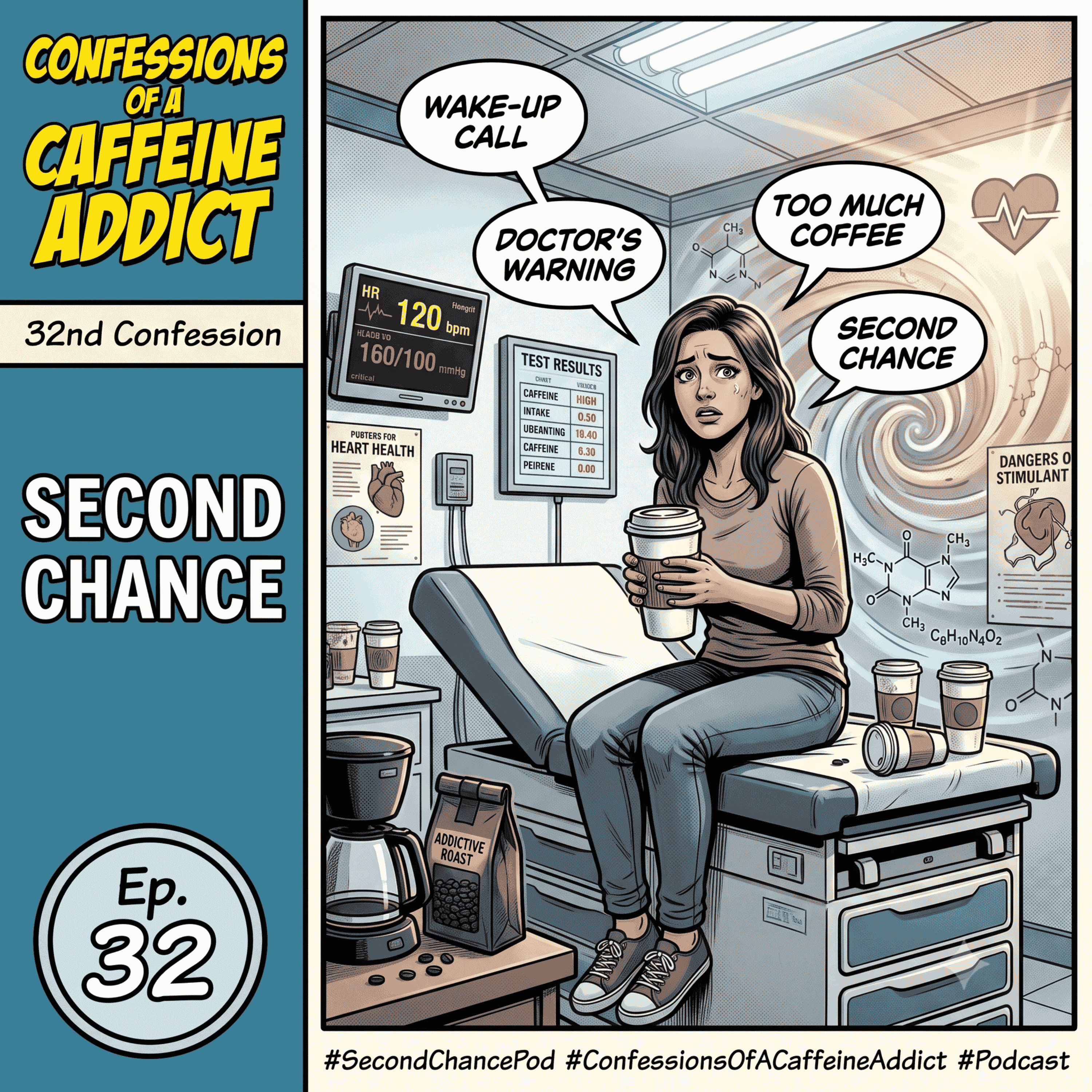
A life built around coffee shop meetings, espresso-based social rituals, and caffeine-fueled productivity slowly unraveled into heart palpitations, panic attacks, and the realization that something as ordinary as coffee had become a powerful, controlling drug. "Caffeinated Anxiety" (32nd confession) follows a woman whose days were structured by lattes and cappuccinos, until mounting anxiety and physical symptoms forced her to confront how deeply caffeine was driving her moods and mental health. It’s a portrait of everyday coffee culture turning into an invisible engine of chronic stress
What You'll Hear in This Episode
- How casual coffee dates, office latte runs, and café studying formed the backbone of her social and work life for years.
- The gradual rise of anxiety symptoms—racing heart, jitteriness, and a sense of impending doom—that seemed unrelated to her “normal” coffee intake at first.
- Missed connections between escalating panic attacks and the steady stream of espresso drinks she saw as harmless.
- The moment a health professional finally linked her anxiety and physical symptoms directly to daily caffeine consumption.
- The emotional struggle of admitting that something socially acceptable and celebrated had quietly become an addiction.
- Early attempts to cut back that failed whenever stress spiked, sending her right back to coffee for comfort and “focus”.
- The beginning of a more intentional path: replacing some coffee with non-caffeinated options and learning to sit with anxiety without a latte in hand.
Key Takeaways
- Everyday coffee culture can mask how powerfully caffeine affects anxiety and mood until symptoms become severe
- Panic attacks and chronic worry may be intensified or even triggered by regular high-dose caffeine intake.
- Because coffee is socially normalized, admitting it has become an addiction often feels harder than recognizing more stigmatized substances.
- Stress frequently drives relapse when trying to reduce caffeine, making emotional coping strategies as important as beverage substitutions.
- Not all anxiety relief requires more medication; for some people, examining and changing caffeine habits is a critical part of feeling better.
Who Should Listen
- Anyone living a “coffee shop” lifestyle where most social or work interactions are centered around caffeinated drinks.
- Listeners dealing with anxiety or panic attacks who have never seriously considered caffeine as a contributing factor.
- People who’ve tried to cut back on coffee but find themselves returning to it during stressful times.
- Mental health professionals interested in how everyday caffeine habits can shape clients’ anxiety patterns.
Resources & Links
- 🌐 Visit the Unwired Life hub for episodes, articles, and updates: https://linktr.ee/UnwiredLife
- 📖 Book: Confessions of a Caffeine Addict by Marina Kushner – the collection this story comes from.
- 📩 Share your own caffeine confession or connect with the community: https://linktr.ee/UnwiredLife.
- 🛒 Live Unwired Media for related educational materials and media projects: LiveUnwired.org.
Transcript
One day I found out that I was expecting a baby. I felt sick. I had lower back pain and rust-colored urine. The circles under my eyes got darker. My skin was dry and pale. I had fevers off and on, and my feet got so swollen that they looked 2 times bigger. My hands swelled until I could not make a fist, open jars, or even grasp items. Something was Wrong. But my doctor did not find anything. I felt that one of the things that made me sick was soda. Listen, we all talk about the grind, but most of you are subsidizing your hustle with a chemical loan you can't pay back. In this new series, Unwired, we aren't just talking theory. We're going into the dirt with 40 anonymous stories of people who thought they were using caffeine to be superheroes, only to realize it was the very thing dismantling their health and their marriages. This is the case study of the hidden tax on your ambition. This is the case study of a mother whose just soda habit quietly became her hardest addiction to beat. Welcome back to Live Unwired. Real stories from real lives transformed by one everyday drug. Most of us barely even question. This 30-second confession is called Addicted to Soda. After pregnancy and IV fluids in the hospital, she starts drinking Pepsi to settle her stomach and keeps going when she gets home. 32 ounces a day becomes 64, then 96, until she feels miserable, can't lose the baby weight, and develops painful fibrocystic breast disease and constant headaches. Doctors warn her to quit. Every attempt collapses when life gets stressful. She's already beaten smoking and alcoholism, yet this non-prescribed drug in a can triggers panic attacks, rosacea, insomnia, urinary tract infections, and chaotic moods that leave her yelling at her kids and hating herself. Addicted to Soda shows how powerful caffeine and sugar can be when they're packaged as everyday drinks, and how hard it is to admit you need recovery for something the world doesn't see as a real addiction. This episode is brought to you by Live Unwired, liveunwired.org, a community helping people reclaim natural energy, deeper sleep, and real peace of mind without leaning on stimulants. liveunwired.org is the home base for the show and the gateway to 3 core resources from the Adrenal Foundation. The Truth About Caffeine, The Truth About Coffee, and Confessions of a Caffeine Addict: 40 True Anonymous Stories That Inspired This Series. Together, these 3 books give you the science, the lived experience, and the practical insight you need if you're ready to explore life with less or no caffeine. And if you recognize yourself in the edges of this story, you'll find support waiting at liveandwired.org. Now settle in for Confession 32: Addicted to Soda. Ready to wake up? When someone says the word addiction, you might think of cigarettes, drugs, or alcohol. Caffeine addiction seldom receives the attention it deserves. However, it has the potential to destroy a person's mental and physical health. I know because I am a victim of caffeine addiction. When I was about 13, my mother decided to start buying what I wanted to drink. I never liked water, milk, or anything else that was good for me. My choice was Pepsi. By the time I was 20, I was going through 8 cans a day. I was buying 3 24-packs a week just for me. This was a financial burden, but I had to have Pepsi or I would go insane. Pepsi gave me the psychological fix that I needed. I suffered from headaches and insomnia. If I stayed up past 11 PM, I was up for the night. Sometimes I would stay up for 28 hours or longer. I blamed my sleep problems on my schedule. I was a waitress at a country and western club, so I thought my internal clock was messed up. I had no idea that caffeine was the culprit. At age 30, I started to become withdrawn. I did not want to leave the house. I was tired, irritable, and verbally abusive to everyone close to me. Every little problem drove me crazy and I had to argue. My anger was out of control. I tried tapering off Pepsi, but it was a must-have. I needed at least 3 cans in the morning before I felt functional. Another problem was that sugar decayed my teeth. I had a smile of a cocaine user, but kept putting off dental work because I did not have insurance. My caffeine addiction was affecting my attention span, focus, and memory. Depression engulfed me. I was no longer myself. I realized I needed to cut down Pepsi. I bought one pack and decided to stretch it for 2 weeks. I found myself opening a can of Pepsi and forgetting that I had one opened and took another one. I began to lose my freshly opened cans around the house. The attempt to cut down did not work. I knew that I had to give it up completely, but I did not have the willpower. I cried every day. I complained about one ailment or another to anyone who would listen. Something always was wrong or hurting. I went to a doctor who found nothing wrong. I started to blame everything on my mental health and went to psychiatrists, but I was not satisfied with what they told me. I knew in my heart that the problem was my caffeine addiction, but I was not ready to admit it. One day I found out that I was expecting a baby. I felt sick. I had lower back pain and rust-colored urine. The circles under my eyes got darker. My skin was dry and pale. I had fevers off and on, and my feet got so swollen that they looked 2 times bigger. My hands swelled until I could not make a fist, open jars, or even grasp items. Something was wrong. Quick pause for a second. If you're hearing yourself in this book, I built 2 things to go deeper than this audiobook can. First, there's Unwired, a caffeine cessation app where you can track your own withdrawal timeline, sleep, mood, and crashes day by day. And inside Unwired, you can work one-on-one with a coach who actually understands caffeine addiction and will walk you through a real plan instead of you guessing alone. The waitlist link is at the very top of the description. Second, there's the Unwired podcast built around 40 real caffeine case studies— students, parents, founders, night shift workers walking through the same crashes you're hearing about right now. The link is right next to the app. If you want more than information, if you actually want a plan, a coach, and stories that feel like yours, hit those links then come right back. But my doctor did not find anything. I felt that one of the things that made me sick was soda. When my baby was born, I had severe headaches and shakes. I was a mess during my hospital stay. I did not sleep. I kept pacing the hall. In part, it was the excitement of having a new baby, but my restlessness was also because of caffeine withdrawal. You would think that going home with my new baby and showing him off to friends and introducing him to his older brother would be exciting, but not for me. I was thinking about Pepsi. I went straight to the fridge and guzzled an entire can in less than a minute. It took about 3 more cans before the headache and shakes subsided. Later that year, I began to suffer from indigestion no matter what I did or did not eat. My menstrual cycle was another problem. I would have blood in my urine 3 days before the start, and during the cycle my blood was so black, thick, and heavy that I considered buying adult diapers. It smelled like rotting flesh, though I was the only one who seemed to notice. Cramps and nausea troubled me regularly. Going to the doctor was out of the question. I had no insurance. Besides, I knew what caused these disorders and that my symptoms would progress if I did not stop my excessive caffeine consumption. My mental problems progressed. I felt anxiety and was grumpy and short-tempered all day. My ability to focus was practically nonexistent. I began to just sit in front of the computer and wilt away. If someone asked me a question, they would have to repeat themselves until I heard them. I had developed such low self-esteem that I felt that I was no better than chewed-up gum on the bottom of someone's shoe. I felt paranoid. I could not leave the house. I was terrified of traffic. The possibility of being in an accident or of something happening overwhelmed me to the point that I stayed home and locked the door. I had no friends or social life. I was living like a hermit. I started to analyze my life and realized that caffeine had become the main focus of my existence. So I quit. Just like that. I knew I would have headaches that would make a root canal without anesthesia look inviting. I also knew that I had to make it through. I figured that the first week would be the hardest, but I felt great and lost some weight. I was more patient and easier to live with, and my children loved this new me. I was full of energy, and I even went to the dentist. Because my tooth ached, I had been taking Excedrin Migraine, which contained caffeine. The next week, however, I began feeling tired. I did not feel rested even after 10 hours of sleep. The headaches were unbearable. I have not had any caffeine for 2 weeks. I still have withdrawal symptoms, but my menstrual cycle is back to normal already. No cramps or attitude, and even the blood is so much lighter. I continue to lose weight. The not-awake feeling still drives me crazy. Other than that, I believe I am on the road to recovery. She was told she was making mountains out of molehills because it was just soda, even as panic attacks, rosacea, insomnia, recurrent infections, and chaos in her home life mounted. Calling her relationship with coke an addiction felt strange, but it fit better than any other word. If people around you minimize your struggle because it doesn't look like a serious drug, this confession validates that the impact, is what matters, not the packaging. For more anonymous stories from people who face similar skepticism and practical steps for change, visit liveunwired.org. If you made it this far into The Truth About Caffeine, you already know this isn't just about coffee. It's about your nervous system, your sleep, your anxiety, and your life. If you don't want to do this alone, That's why I built Unwired. Inside the Unwired app, you can log your last caffeine use, track withdrawals, sleep, mood, and energy over days and weeks. See your own nervous system reset instead of hoping it's working, and get matched with a coach for one-on-one training so you're not white-knuckling this by yourself. Alongside that, the Unwired podcast walks through 40 real caffeine case studies People who went from just coffee to energy drinks and pills, and then back out. You'll hear their mistakes, relapses, and what actually worked. Both links are at the top of the description. Join the Unwired app waitlist for coaching and tracking. Listen to the Unwired podcast. Save this audiobook, send it to one person who needs it, and if you're stuck in that daily 2 PM crash, come do this with us inside Unwired, not just in your head.