Episode 31 · Duration: 11:57
About this episode
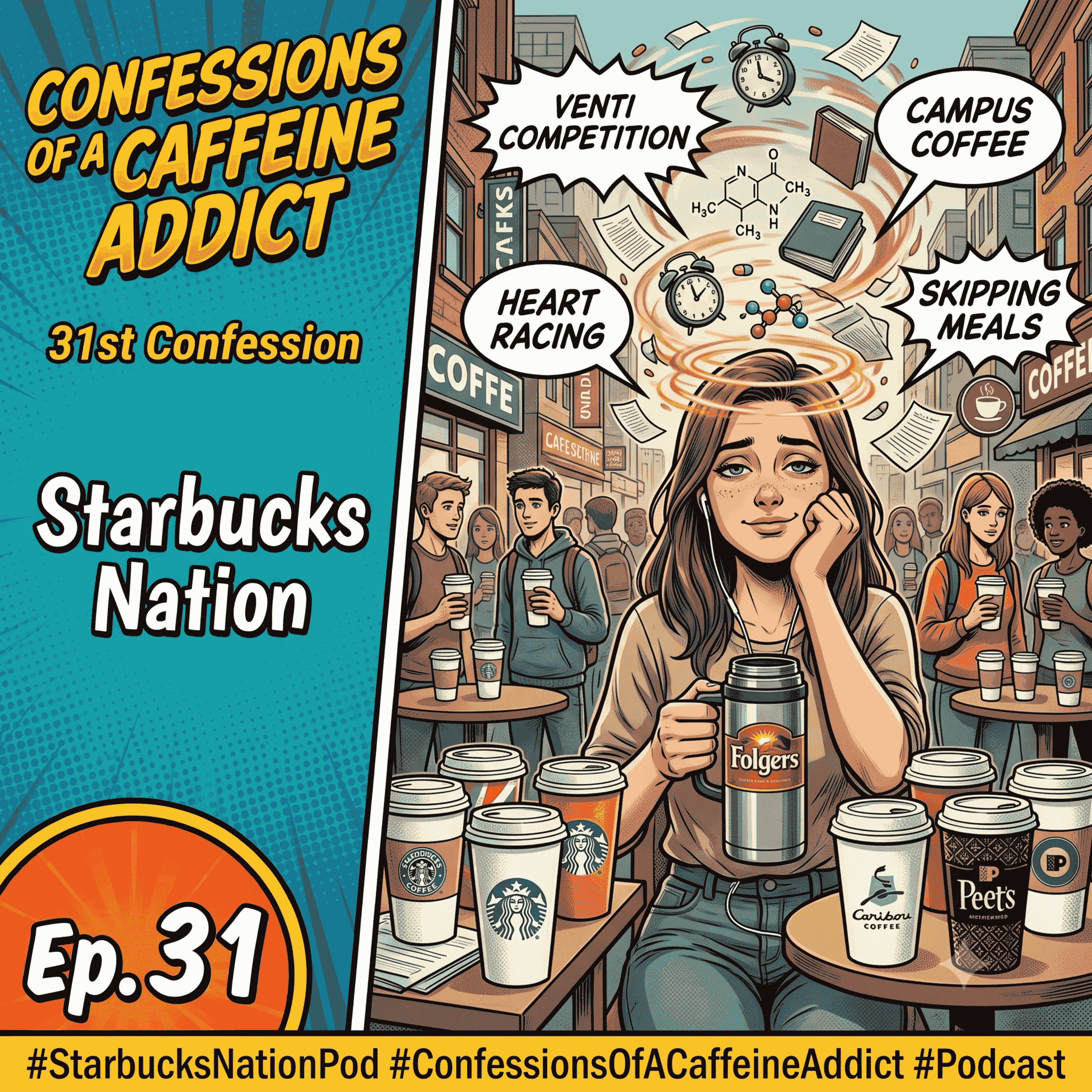
A former Starbucks Venti-drinking competition among teenage girlfriends spiraled into a 17-year caffeine dependency that quietly stole workouts, meals, and academic focus before finally being broken through slow, deliberate substitution. "Starbucks Nation" follows a teen who chased coffee culture to fit in, only to discover years later that caffeine had become a physical need rather than a social choice. It's an honest look at how caffeine and procrastination can feed off each other in a college environment saturated with coffee at every turn.
What You'll Hear in This Episode
- How Starbucks becoming trendy in the teenage years turned coffee into a social status symbol among friends.
- A silent competition among girlfriends over who could drink the most Venti-sized coffees, with decaf never considered an option.
- The gradual shift from drinking coffee to fit in socially to genuinely needing caffeine just to function and concentrate.
- How coffee began replacing meals entirely and workouts became less frequent as caffeine consumption increased.
- The two-year delay in recognizing that heart palpitations and irregular heartbeat were connected to excessive caffeine intake.
- A failed initial attempt to quit simply by not brewing coffee, undermined by the sheer availability of coffee on campus.
- Painful stomachaches that ultimately convinced a doctor and patient that coffee needed to go, leading to soda, energy drinks, and caffeine pills as substitutes before eventually eliminating those tool
Key Takeaways
- Caffeine habits that start as social conformity in the teen years can evolve into genuine physical dependency by adulthood.
- Procrastination and caffeine use can create a mutually reinforcing cycle that's difficult to break without addressing both simultaneously.
- Simply avoiding brewing coffee at home isn't enough to quit when caffeine is available everywhere in daily environments like college campuses.
- Physical symptoms like stomachaches and irregular heartbeat may take years to be properly linked back to caffeine consumption.
- Lack of social support makes quitting significantly harder when friends and family continue normalizing frequent caffeine breaks
Who Should Listen
- Anyone who started drinking coffee for social reasons as a teen and later found it became a genuine physical need.
- College students who rely on coffee to combat procrastination and tight deadlines.
- Listeners experiencing heart palpitations or stomach issues who haven't yet connected them to caffeine intake.
- Anyone attempting to quit caffeine without addressing the constant environmental availability that makes relapse easy.
Resources & Links
🌐 Visit us at https://linktr.ee/UnwiredLife
📖 Confessions of a Caffeine Addict by Marina Kushner
📩 Share your own caffeine confession: https://linktr.ee/UnwiredLife
🛒 Live Unwired Media : LiveUnwired.org
Transcript
This is the case study of a man who uses caffeine to survive impossible schedules until his body pushes back. Welcome back to Live Unwired. Real stories from real lives transformed by one everyday drug most of us barely even question. This 31st confession is called Running on Fumes. After leaving the military and returning to school, he stacks a full course load on top of long work shifts, telling himself he just needs a little help to stay awake and focused. Coffee starts as an occasional tool, then becomes a daily habit, then a large mug and caffeine pill routine designed to force his body through 17-hour days. At first, it feels like efficiency. Over time, it feels like survival. Running on Fumes explores how caffeine can turn brutal schedules into something barely manageable until the sleeplessness, nerves, and cognitive strain start to fracture his health and his ability to actually learn. It's a story about graduating not just from school, but from the belief that stimulants are the only way to keep up. This episode is brought to you by Live Unwired, liveunwired.org, a community helping people reclaim natural energy, deeper sleep, and real peace of mind without leaning on stimulants. liveunwired.org is the home base for the show. And the gateway to 3 core resources from the Adrenal Foundation: The Truth About Caffeine, The Truth About Coffee, and Confessions of a Caffeine Addict: 40 True Anonymous Stories That Inspired This Series. Together, these 3 books give you the science, the lived experience, and the practical insight you need if you're ready to explore life with less or no caffeine. And if you recognize yourself in the edges of this story, you'll find support waiting at liveunwired.org. Now settle in for Confession 31: Running on Fumes. It was no longer fun and glamorous to drink 5 venti mochas every day. It was unhealthy, so I had to find another way of getting caffeine. Soda, energy drinks, and caffeine pills replaced coffee in my diet. My caffeine addiction was not affecting only me. My roommates had to put up with my irritability if I did not have Pepsi. My boyfriend Ethan was exasperated by my need for caffeine. He did not believe that caffeine was addictive. Listen, we all talk about the grind, but most of you are subsidizing your hustle with a chemical loan you can't pay back. In this new series, Unwired, we aren't just talking theory. We're going into the dirt with 40 anonymous stories of people who thought they were using caffeine to be superheroes, only to realize it was the very thing dismantling their health and their marriages. This is the case study of the hidden tax on your ambition. Starbucks Nation. I have never smoked a cigarette, but I have been addicted to caffeine for almost 17 years. I began my relationship with caffeine in my teens when Starbucks was becoming popular, and all of a sudden coffee was a cool drink. When I went out with my friends, I always wanted coffee. By the time I was a sophomore in high school, I was taking a thermos of Folgers with me every morning. Weekdays were punctuated by multiple trips to Starbucks with my girlfriends. It was a silent competition. Whoever could drink the most ventis won. Decaf was never an option. Movies and television shows that glamorized coffee drinking did not help. A coffee culture seems to dominate college campuses. Coffee's everywhere. Had I not already been addicted to caffeine when I entered college, it probably would have happened anyway. I was no longer drinking Starbucks to fit in. I needed caffeine. It had become something that my body expected. I didn't mind. I loved the feeling that my morning cup of coffee gave me. My mind was clearer, and I could concentrate for longer periods of time. The study groups I attended took place near the cafeteria, where we would take turns making coffee runs. Soon, I began to realize coffee's negative effects. Until halfway through my sophomore year, I was working out several times a week. As I increased my coffee consumption, I started working out less often. Coffee even started to replace some of my meals. If I did not have time to eat, I would have a cup of coffee instead. Procrastination's always been a downfall of mine. I was often up all night writing or editing, and I would go through 2 pots of coffee. However, caffeine did more than keep me awake. It also made my heart beat faster and, at times, irregular. It was 2 years before I admitted to myself that caffeine might have become a problem. Coffee and procrastination seemed to go together. I would justify putting off an assignment because I would tell myself that coffee would keep me awake to finish. I also told myself that I procrastinated, and if I did not drink coffee, I would not get my work done. My 2 negative habits were feeding off each other and manifesting in an unhealthy way. I knew I needed to cut back on coffee. How hard could it be? I just would not brew any. I should have known better. You could hardly walk into a building on campus without smelling coffee. It was silly to think that I would not go out of my way to get my morning cup. During that first day without coffee, I felt okay, but I missed the wide-awake feeling, and it was a little harder to concentrate. The next day, I had a blinding headache. I could not function. I was scatterbrained most of the morning. I thought that maybe the headache was from not having eaten. Then I thought that the head should not ache when you are hungry, and if it does, it is a sign of accumulation of toxins in the body. Since I began to detoxify my body on a regular basis, I did not have that problem anymore. I decided to eat something anyway just to test it out. After I ate, I still had a headache and I desperately wanted coffee, so I made a cup. Quick pause for a second. If you're hearing yourself in this book, I built 2 things to go deeper than this audiobook can. First, there's Unwired, a caffeine cessation app where you can track your own withdrawal timeline, sleep, mood, and crashes day by day. And inside Unwired you can work one-on-one with a coach who actually understands caffeine addiction and will walk you through a real plan instead of you guessing alone. The waitlist link is at the very top of the description. Second, there's the Unwired podcast built around 40 real caffeine case studies, students, parents, founders, night shift workers walking through the same crashes you're hearing about right now. The link is right next to the app. If you want more than information, if you actually want a plan, a coach, and stories that feel like yours, Hit those links, then come right back. Several minutes later, my headache subsided. My mind was clear again. My sense of control was returning, and the rest of the day I felt much better. I had no idea that caffeine could affect me in such a way. No one had ever warned me about this, and I had never heard of this happening to anyone. I could not believe that something that made me feel great could also make me feel terrible. However, I decided that I would put off giving up coffee until I was not in school. Without caffeine, I could not concentrate and I was anxious and antsy. 3 months later, I decided to quit coffee because I started to have stomachaches every time I had a cup. The pain was so severe that I went to my doctor, who affirmed that coffee could cause the pain. It was no longer fun and glamorous to drink 5 venti mochas every day. It was unhealthy. So I had to find another way of getting caffeine. Soda, energy drinks, and caffeine pills replaced coffee in my diet. My caffeine addiction was not affecting only me. My roommates had to put up with my irritability if I did not have Pepsi. My boyfriend, Ethan, was exasperated by my need for caffeine. He did not believe that caffeine was addictive. He thought I found an excuse to drink soda. Ethan wasn't a health nut, but he did not consume caffeine. I also wanted to quit. I did not want to wake up anxious in the morning and go to bed at night thinking about when and where I would get my soda the next day. I was tired of being jittery, anxious, and sleeping poorly. I wanted to be able to work out without worrying about my heart rate getting too high. I just wanted not to be dependent on caffeine. So I cut back, and eventually I wanted to cut caffeine out of my diet completely. One challenge I faced was the lack of support. We are a caffeine-dependent society. Caffeine is everywhere. Everyone is taking a coffee break every 15 minutes. All my girlfriends do. It is hard to quit when you're constantly being bombarded with the exact vice you are trying to eliminate. After 3 and a half months, I still crave coffee, but I drink it only on a night out with my girlfriends or as a treat after dinner with my boyfriend, and I always order decaf. Honestly, drinking those expensive lattes and mochas makes me feel a little sick. I have found flavored teas or hot chocolate is a great alternative. My moods improved dramatically. I sleep better and I am a morning person now. I go to the gym and work out with no more spike in heart rate or headaches. I drink mostly water and sometimes tea. There is a financial benefit too. Since I cut back on caffeine, I do not spend money on soda and coffee at the grocery store and on coffeehouse drinks, and I certainly do not miss shelling out $6 for my morning latte. Ethan and I bought a juicer, so maybe I would start to crave apple-carrot-kiwi juice instead of latte. Quitting caffeine is my decision. My friends and family encourage me, but I am the only one who can put down the coffee cup and make the decision not to pick it up again. Running on fumes sounds heroic in stories. In his life, it meant notes that barely made sense and a brain pushed past its limits. Caffeine let him pretend he had more hours and more stamina than he actually did, at the cost of clear thinking and sustainable health. If you've taken pride in how long you can go without sleep or how much you can squeeze into a day, thanks to stimulants, this episode invites you to ask what you're sacrificing and whether you want to keep paying that price. Resources on redefining productivity, pacing your energy, and respecting your biology are available at liveandwired.org. Gradual changes to sleep and stimulant use can make a bigger difference than you might expect. If you made it this far into The Truth About Caffeine, you already know this isn't just about coffee. It's about your nervous system, your sleep, your anxiety, and your life. If you don't want to do this alone, that's why I built Unwired. Inside the Unwired app, you can log your last caffeine use, track withdrawals, sleep, mood, and energy over days and weeks. See your own nervous system reset instead of hoping it's working. And get matched with a coach for one-on-one training so you're not white-knuckling this by yourself. Alongside that, the Unwired podcast walks through 40 real caffeine case studies, people who went from just coffee to energy drinks and pills and then back out. You'll hear their mistakes, relapses, and what actually worked. Both links are at the top of the description. Join the Unwired app waitlist for coaching and tracking. Listen to the Unwired podcast. Save this audiobook, send it to one person who needs it, And if you're stuck in that daily 2 PM crash, come do this with us inside Unwired, not just in your head.