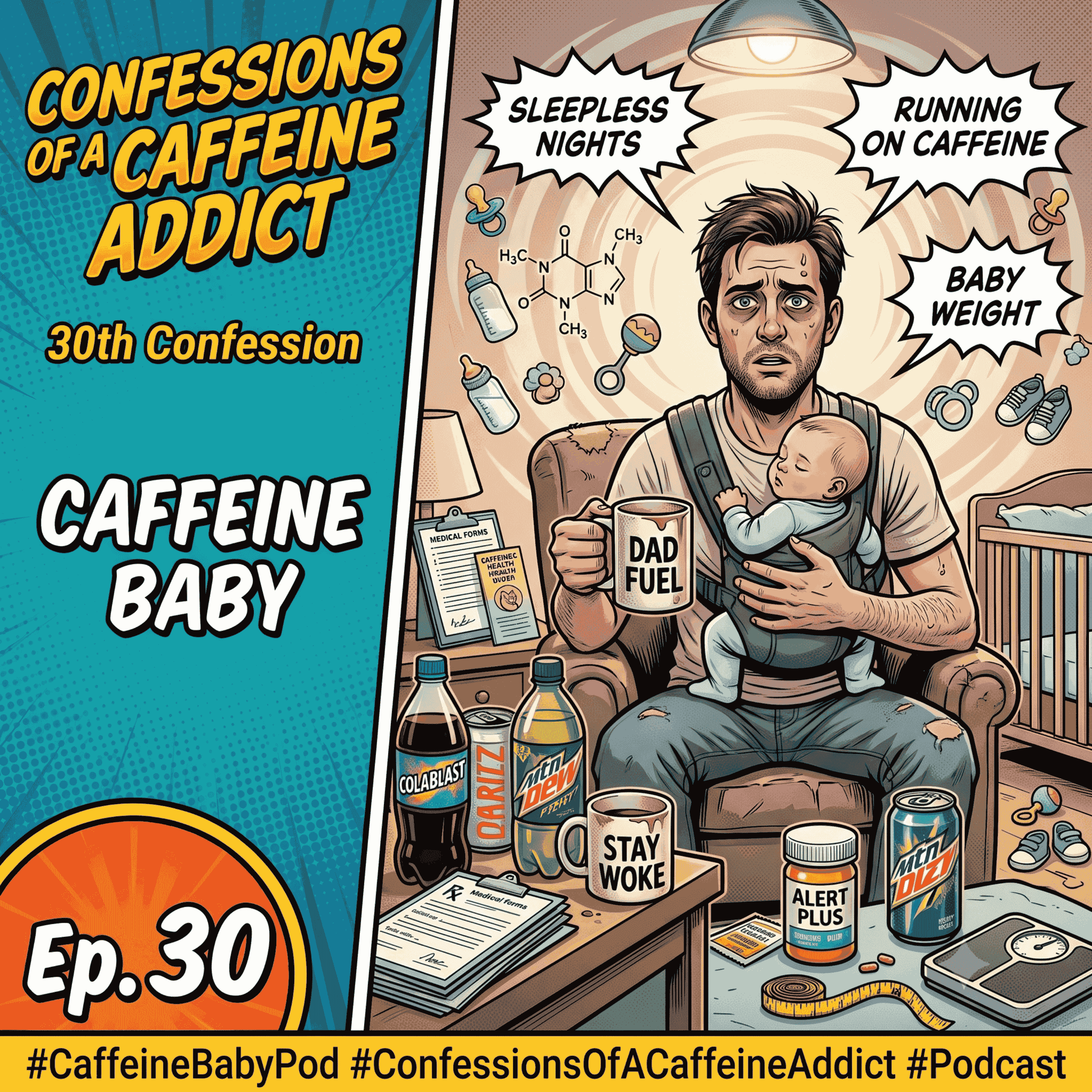
Episode 30 · Duration: 15:44
About this episode
Coffee was pure comfort in this narrator's Southern upbringing, celebrated as a family ritual for 35 straight years, but that same comfort became a crutch masking chronic indigestion, homesickness, and eventually a husband's alarming liver damage. "Caffeine Baby" traces how a warm childhood tradition of morning, afternoon, and evening coffee evolved into seven-or-eight-cup binge sessions at a diner, and how a cross-country move finally forced a reckoning with the habit's true cost. It's a story about choosing gradual tapering over cold turkey, and discovering that quitting coffee didn't have to mean quitting comfort altogether.
What You'll Hear in This Episode
- How a Southern family tradition of morning, afternoon, and evening coffee turned a warm childhood ritual into a lifelong dependency.
- The escalation from one or two cups in high school to seven or eight cups per sitting at a favorite college diner.
- Chronic indigestion and stomach pain that developed alongside increasing coffee consumption, though the connection wasn't obvious at first.
- A terrifying hospital scare when her husband's espresso-fueled coffee habit caused liver enzymes to spike 200 percent above normal.
- A disastrous camping trip in Yosemite that revealed just how uncomfortable life without coffee access could feel.
- The moment of clarity while brewing yet another pot that led to a full commitment to ending coffee dependence.
- A successful gradual tapering strategy using black tea, then green tea, then herbal tea, without ever declaring coffee off-limits forever.
Key Takeaways
- Deeply comforting family traditions can unintentionally normalize addictive substances from a very young age.
- Espresso and concentrated coffee drinks can cause serious, measurable liver damage when consumed heavily and regularly.
- Travel and outdoor activities away from easy caffeine access can reveal the true extent of a dependency.
- Gradual tapering with substitutes like tea can succeed where declaring an absolute, permanent ban might fail.
- Allowing occasional indulgences, like holiday coffee, doesn't have to derail long-term progress toward reduced dependence.
Who Should Listen
- Anyone whose relationship with coffee is tied to deep family traditions or emotional comfort.
- Partners concerned about a loved one's heavy espresso or coffee consumption and its physical health risks.
- Listeners who have struggled with chronic indigestion or stomach pain without linking it to caffeine.
- Anyone looking for a realistic, gradual approach to cutting back on coffee without going cold turkey.
Resources & Links
🌐 Visit us at https://linktr.ee/UnwiredLife
📖 Confessions of a Caffeine Addict by Marina Kushner
📩 Share your own caffeine confession: https://linktr.ee/UnwiredLife
🛒 Live Unwired Media : LiveUnwired.org
Transcript
One weekend, my friends, who are not coffee drinkers, invited us to go camping and hiking for a few days in Yosemite National Park. I wanted to go, but the first question that came to my mind was, what am I going to do about coffee? Hmm? I got creative and managed to get through the 4-day weekend, but I spent most of the trip feeling tired, edgy, and uncomfortable. I couldn't wait to get back home to my coffee pot. Listen, we all talk about the grind, but most of you are subsidizing your hustle with a chemical loan you can't pay back. In this new series, Unwired, we aren't just talking theory. We're going into the dirt with 40 anonymous stories of people who thought they were using caffeine to be superheroes, only to realize it was the very thing dismantling their health and their marriages. This is the case study of the hidden tax on your ambition. This is the case study of a family culture built around coffee and what happens when one member finally walks away. Welcome back to Live Unwired. Real stories from real lives transformed by one everyday drug most of us barely even question. This 30th confession is called Caffeine Baby. In Texas and across much of the South, her family treats coffee like a way of life. Morning coffee over breakfast, afternoon coffee over snacks, evening coffee over dessert. As a little girl, she sits in bed with her mother in pajamas while her dad brings them both cups, hers mostly milk but still coffee. Through high school and college, coffee becomes her constant companion for pressure, homesickness, and late-night study marathons, sometimes 7 or 8 cups in a single sitting at a cozy diner with bottomless refills. Over the years, chronic indigestion, headaches, foggy thinking, and relentless sleepiness creep in, but she avoids linking them to coffee because so many cherished memories are tied to the cup. When her husband winds up in the hospital with chest and abdominal pain and dangerously high liver enzymes that doctors trace back to coffee, she's forced to reconsider what this comfort is really costing. Caffeine Baby is about growing up in a coffee-soaked culture, seeing how deep the roots go, and deciding whether love for the ritual is worth the physical and emotional toll. This episode is brought to you by Live Unwired, liveunwired.org, a community helping people reclaim natural energy, deeper sleep, and real peace of mind with without leaning on stimulants. liveunwired.org is the home base for the show and the gateway to 3 core resources from the Adrenal Foundation: The Truth About Caffeine, The Truth About Coffee, and Confessions of a Caffeine Addict: 40 True Anonymous Stories That Inspired This Series. Together, these 3 books give you the science, the lived experience, and the practical insight you need if you're ready to explore life with less or no caffeine. And if you recognize yourself in the edges of the story, you'll find support waiting at liveandwired.org. Now settle in for Confession 30, Caffeine Baby. Caffeine Baby. In Texas, or anywhere in the South, coffee is a way of life. We have coffee hour instead of tea or cocktail hour. My family always took it a step further. We would have morning coffee over conversation and breakfast, afternoon coffee over conversation and snacks, and evening coffee over conversation and dessert. A cup of coffee gathers us together. It was also about love and cozy moments of comfort. I still remember when I was a little girl sitting in bed with my mother in our pajamas, and my dad would bring us both cups of coffee. Mine was mostly milk, but it contained coffee just the same. Every morning for 35 years, he brought my mother a cup of coffee in bed. He still does it to this day. When I began high school, the social and academic pressure became very draining. I'd drink a cup or 2 of coffee in the morning before school and a whole pot of it to stay up late and get my homework done. In college, my love affair with coffee grew to new heights. Not only was I working against the clock to accommodate a tremendous workload, but I was also away from home for the first time. Coffee was as comforting as a baby's blanket when I thought that I wouldn't see my family for months. I'd have at least 2 cups in the morning before class and a cup in the afternoon, and then I needed more. Staying awake wasn't the issue. I needed to keep my homesickness away. I discovered a place that could emotionally replace home. A cozy, nostalgic diner with a granite counter, free wireless internet, and a bottomless coffee cup. It was the perfect spot to get away from the distractions of my apartment and to work on term papers and assignments. For hours I would sit with my computer typing away, sometimes ordering a meal or just a slice of pie, and always there would be a steaming cup of coffee. The diner waitress made sure my cup was filled to to the brim. I drank 7 or 8 cups of coffee in a single sitting. The manager joked that I was on a liquid diet. Never did I consider quitting coffee. It was my companion. If I was lonely, sad, or needed a moment to think or dream, coffee was there. Some of the best moments that I'd shared with my family included coffee. I didn't want to believe that it could be affecting my health, but it was. I never had as much energy as my girlfriends. I was always tired. Whether it was morning, noon, or night, sleepiness often stood in my way. Wasn't normal, I knew that, but I thought it was just me. After all, my mother was the same way. Then I developed a chronic digestive problem. Almost any meal would give me a horrible stomach pain, and even a simple cup of coffee could be the bullet. Taking digestive enzymes helped me return to my normal life. However, to assume that my sudden increase in coffee drinking had something to do with it wasn't too far off the mark. I had to have at least 2 or 3 cups of strong coffee every morning unless I wanted to get a headache. Foggy thinking, excessive tiredness, and pounding headaches were all sure annoyances if I had to skip my morning fix. I almost never let that happen. To everyone's shock and awe, I married a non-coffee drinker. We then left the American South and moved to the West Coast. I was further from my family than ever before, and I had a demanding full-time job. The stress of moving across the country, entering the workforce, and being a newlywed was greater than I wanted to admit. My husband, in an effort to keep going as well, began drinking brewed coffee every morning with an additional 4 shots of espresso. Our morning coffee stops became a daily routine. In just a few months, I raced him to the hospital for severe chest and abdominal pain. The doctors thought it was heartburn. It wasn't. They thought it was gallstones. It wasn't. After extensive blood tests, they discovered that his liver enzymes were 200% above normal. Unless he wanted to develop serious permanent liver problems, the doctors demanded that he eat bland foods and consume no alcohol and no coffee. Whew! Later, pizza and beer have returned to his diet. However, after just a few days of moderate coffee consumption, sometimes just one cup, the pain came back. When coffee was clearly singled out as the culprit, I had been drinking it alone again. I'd always believed coffee was one of life's great pleasures. I had often not done things that I wanted to do because of my coffee habit. It has— quick pause for a second. If you're hearing yourself in this book, I built 2 things to go deeper than this audiobook can. First, there's Unwired, a caffeine cessation app where you can track your own withdrawal timeline, sleep, mood, and crashes day by day. And inside Unwired, you can work one-on-one with a coach who actually understands caffeine addiction and will walk you through a real plan instead of you guessing alone. The waitlist link is at the very top of the description. Second, there's the Unwired podcast built around 40 real caffeine case studies. Students, parents, founders, night shift workers walking through the same crashes you're hearing about right now. The link is right next to the app. If you want more than information, if you actually want a plan, a coach, and stories that feel like yours, hit those links, then come right back. The potential to stand in the way, whether I was planning special healthy diets or trips or other events where I couldn't get easy access to coffee. One weekend, my friends, who are not coffee drinkers, invited us to go camping and hiking for a few days in Yosemite National Park. I wanted to go, but the first question that came to my mind was, what am I going to do about coffee? Hmm? I got creative and managed to get through the 4-day weekend, but I spent most of the trip feeling tired, edgy, and uncomfortable. I couldn't wait to get back home to my coffee pot. A few days later, I got up and as usual immediately went downstairs to put up a coffee pot. As I went through the routine of dumping out the filter, refilling the reservoir, and waiting for it to brew, all the while feeling miserable until I could bring that first cup of coffee to my lips, I realized that I was tired of the whole routine. I was tired of making coffee. I was tired of drinking coffee. I was tired of having bad breath, stomachaches, diarrhea, and headaches. I was tired of the sugar and the cream. I was tired of spending $40 to $50 a month on coffee. Mostly, I was tired of coffee controlling my life. Right then and there, I fully committed to ending my dependence on coffee. I didn't tell myself that I would never have another cup of coffee ever again. That would make it harder to quit. The goal was not to completely remove coffee from my life, but rather to get myself to a point where I wouldn't need to have it. I began gradually replacing my morning coffee with black tea. I was also addicted to sugar, so I sweetened my tea with stevia, a no-calorie natural sweetener. Gradually, I reduced my 2 cups of black tea to 1 cup each morning. Then I made the switch to green tea, which has even less caffeine than the black. Finally, I got to the point where I could skip my morning tea and not feel the difference. I wake up feeling great instead of dragging around the house. Altogether, the transition has been surprisingly painless. I think it was because I put my whole heart and soul behind it. I know that many people experience tremendous withdrawal symptoms when they try to quit coffee. My mother once tried to quit and went into a serious depression. I, on the other hand, felt liberated. I wasn't a prisoner anymore. To talk about ending the coffee or caffeine dependency in such dramatic terms seems a little bit silly. After all, it's not cocaine, heroin, or alcohol. However, it is an addiction that affects one's health and life. It is an emotional addiction as much as it is a physiological addiction. My husband urged me to stop drinking coffee because he said that I was no fun until I had had my morning cup. When I stopped drinking coffee, he was afraid that the crankier caffeine-free me would be here to stay. Even though he was glad that I'd finally quit, it was a little tense around the house. I still get snappy, but it gets better every day. Quitting caffeine is a long transition. Luckily for me, most of the people around me are not coffee drinkers. It helps keep the temptations at bay. While spending 2 weeks with my family in Texas for Christmas, the smell of coffee fills my nose almost 14 hours a day. It drives me crazy. If you deny yourself something you like forever, it's hard to maintain self-control. On Christmas Day, I drink as much coffee as I want. I even have a cup or 2 for the few days after that. But when I return home from Texas, I step back into my caffeine-free life. In just those few days of coffee relapse, the effects of caffeine become magnified. I clenched my jaw so hard at night that it woke me up, and I felt groggy and tired during the day. Tea didn't sound as good or as appetizing as it did before, but I wasn't about to throw away all the hard work I'd put into my new lifestyle. The best thing I did that made quitting caffeine easy was tapering off instead of going cold turkey. I substituted coffee with tea to ease the withdrawal symptoms and started getting used to life without coffee. From there, the transition was easy. It's also important to have something available when you're craving the rich taste of coffee. Some mornings, a light-flavored tea just didn't cut it. I needed something richer and tastier. On those days, I would treat myself to a cup of hot chocolate instead of falling off the wagon. It's better than giving up on your endeavor to quit caffeine. I still miss coffee, but I remind myself that I choose not to drink it and look forward to that special day when I will indulge myself. Being a caffeine baby in a coffee-centered family made coffee feel like love, comfort, and home, not a substance to question. Letting herself see the link between chronic indigestion, fatigue, and her husband's liver crisis and coffee was an emotional as well as medical step. If coffee is woven into your favorite memories, it can be painful to ask whether it's also part of your current struggles. This confession shows that you can honor what coffee has meant and still choose differently now. For more family-focused stories and ideas on changing the ritual without losing the connection, explore liveunwired.org. If you made it this far into The Truth About Caffeine, You already know this isn't just about coffee. It's about your nervous system, your sleep, your anxiety, and your life. If you don't want to do this alone, that's why I built Unwired. Inside the Unwired app, you can log your last caffeine use, track withdrawals, sleep, mood, and energy over days and weeks. See your own nervous system reset instead of hoping it's working. And get matched with a coach for one-on-one training, so you're not white-knuckling this by yourself. Alongside that, the Unwired podcast walks through 40 real caffeine case studies, people who went from just coffee to energy drinks and pills, and then back out. You'll hear their mistakes, relapses, and what actually worked. Both links are at the top of the description. Join the Unwired app waitlist for coaching and tracking. Listen to the Unwired podcast. Best. Save this audiobook, send it to one person who needs it, and if you're stuck in that daily 2 PM crash, come do this with us inside Unwired, not just in your head.