Episode 28 · Duration: 18:02
About this episode
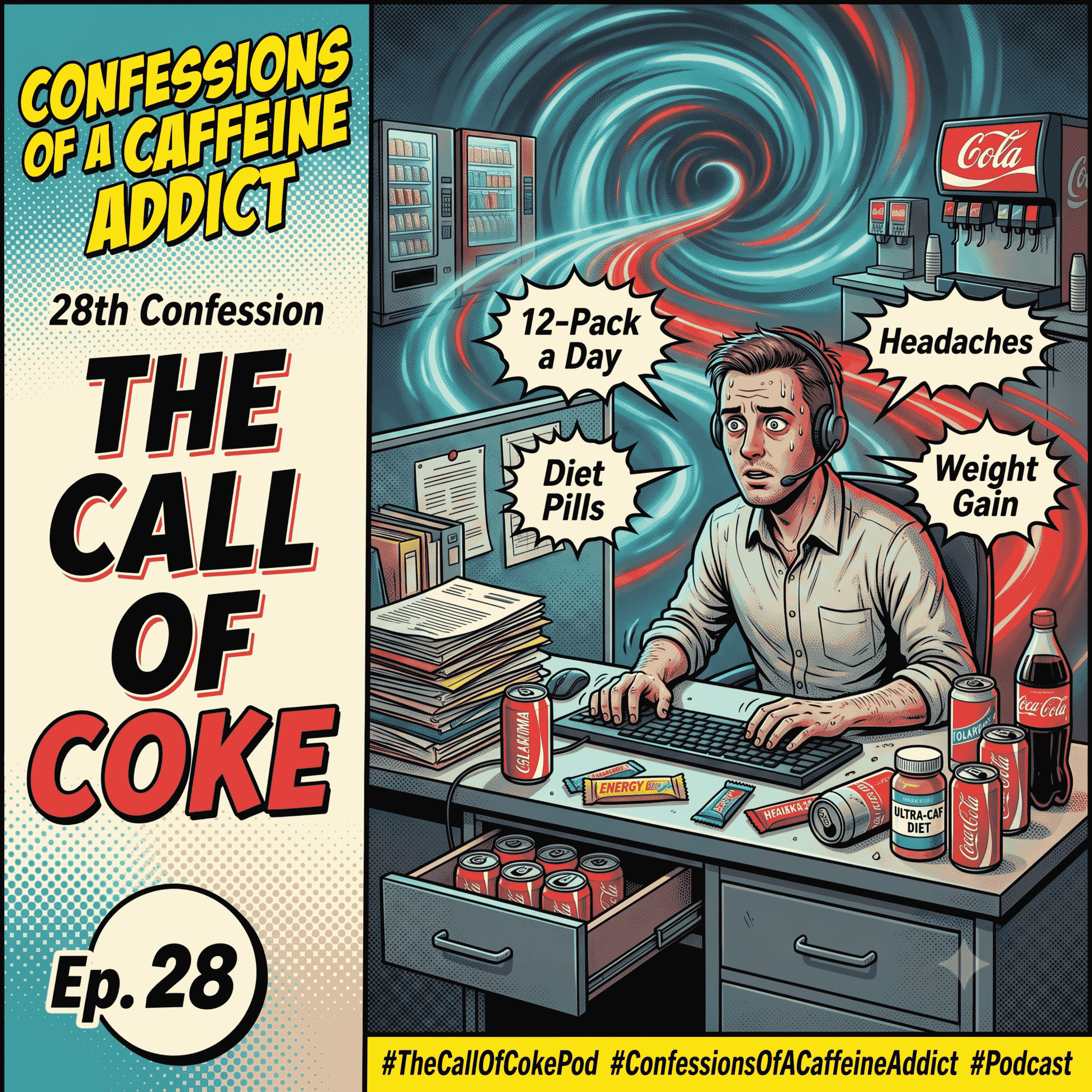
An accidental double entendre in the workplace—"I love Coke"—led to a drug test demand and an on-the-spot firing, exposing just how visibly caffeine intoxication can mimic illegal drug use. "The Call of Coke" traces a childhood restriction of one Coke per week into a full-blown addiction that saw the narrator drinking 17 cans a day, gaining 90 pounds, and ultimately losing his first job within a week of starting. It's a dramatic story of financial deception, secret stashes, and a methodical ten-week recovery plan that eventually restored his health and finances.
What You'll Hear in This Episode
- How a strict childhood rule of one Coke per week sparked years of stealing coins and lying about lunch money to fund a growing habit.
- The unrestricted access to soda fountains in college fueled a 40-pound weight gain during freshman year alone.
- A workplace crisis where visible caffeine-fueled jitteriness led a supervisor to mistake the symptoms for illegal drug use, resulting in immediate termination.
- The moment a doctor's blood pressure diagnosis revealed a staggering daily intake of 17 cans of Coke.
- A failed attempt to use caffeine diet pills for weight loss, which only deepened the addiction instead of solving it.
- The structured ten-week plan that gradually replaced Coke with coffee, then tea, then decaf, without any single cold-turkey shock.
- The ultimate payoff: a 70-pound weight loss, a clean doctor's bill of health, and thousands of dollars saved annually.
Key Takeaways
- Severe caffeine intoxication can visibly resemble illegal drug use, creating serious real-world consequences at work.
- Childhood restrictions on sugary, caffeinated drinks can sometimes backfire, fueling secretive behavior and escalating cravings.
- Diet pills marketed for weight loss often contain significant caffeine, which can worsen rather than solve underlying addiction
- Gradual, structured substitution plans that replace one substance at a time can be more sustainable than abrupt cold-turkey attempts.
- Beating a long-term soda addiction can produce dramatic improvements in weight, blood pressure, and personal finances simultaneously.
Who Should Listen
- Anyone who has experienced physical symptoms from caffeine that were mistaken for something more serious.
- Listeners managing childhood-rooted habits around sugar or soda that persisted into adulthood
- Individuals considering caffeine-based diet pills for weight loss.
- Anyone looking for a realistic, step-by-step framework for gradually eliminating a long-term soda addiction.
Resources & Links
🌐 Visit us at https://linktr.ee/UnwiredLife
📖 Confessions of a Caffeine Addict by Marina Kushner
📩 Share your own caffeine confession: https://linktr.ee/UnwiredLife
🛒 Live Unwired Media : LiveUnwired.org
Transcript
I became aware that Coke was my second greatest expense after rent. I had been drinking 17 cans a day. Switching back to cans from bottles was important because I was avoiding the temptation to just finish the bottle. There were times when I slipped up and cracked open an extra can, desiring more Coke than was allotted. Instead of punishing myself for cheating, I simply extended the timeframe by an additional week before stepping down another 3 cans. Listen, we all talk about the grind, but most of you are subsidizing your hustle with a chemical loan you can't pay back. In this new series, Unwired, we aren't just talking theory. We're going into the dirt with 40 anonymous stories of people who thought they were using caffeine to be superheroes, only to realize it was the very thing dismantling their health and their marriages. This is the case study of the hidden tax on your ambition. This is the case study of a man whose love for coke nearly got him sent for a drug test. Welcome back to Live Unwired, real stories from real lives transformed by one everyday drug most of us barely even question. This 28th confession is called The Call of Coke. It opens in a headset-packed office where he blurts out, I love coke. Loud enough for heads to turn and his supervisor to stand up and ask him into the office. His heart is racing, sweat beads at his hairline, his undershirt is damp, and his fingers are still striking phantom keys in midair, but none of it is from anxiety. He's in the first hour of his shift, fresh from lunch, where he washed down a diet pill with half a dozen cans of Coca-Cola. Inside the office, his supervisor says comments like that are inappropriate. He scrambles to clarify he meant Coca-Cola, not the other kind of coke, but realizes too late how it sounded. The diet capsule is releasing its 200 milligrams of caffeine, and he feels high, flipped from a natural Type B personality into a wired Type A. His supervisor isn't convinced and tells him he wants a drug test. The Call of Coke traces how soda, diet pills, and massive caffeine doses gradually rewired his mood, energy, and behavior at work until he looked more like a stimulant abuser than a bored call center employee. It's about how easily a favorite drink can become a drug and how the body keeps calling for more long after common sense says stop. This episode is brought to you by Live Unwired. liveunwired. A community helping people reclaim natural energy, deeper sleep, and real peace of mind without leaning on stimulants. liveunwired.org is the home base for this show and the gateway to 3 core resources from the Adrenal Foundation: The Truth About Caffeine, The Truth About Coffee, and Confessions of a Caffeine Addict: 40 True Anonymous Stories That Inspired the Series. Together, these 3 books give you the science, the lived experience, and the practical insight you need if you're ready to explore life with less or no caffeine. And if you recognize yourself in the edges of this story, you'll find support waiting at liveandwired.org. Now settle in for Confession 28, The Call of Coke. The Call of Coke. I love Coke. Around me, heads set, crowd heads turned to see who had professed such an illegal love. My supervisor stood up from his desk. Mr. J, he said, step into my office. Oh, my heart was racing, almost jumping out of my shirt. Sweat collected at my hairline and threatened to drip down my forehead. My undershirt was damp and clinging. My hands twitched. None of this was from anxiety. I was in the first hour of my shift, just back from lunch, where I had consumed a diet pill and half a dozen cans of my favorite drink. In the office, I took a seat, rocking back and forth, my fingers still striking at phantom keys. Mr. J, comments like that are inappropriate. It hit me. Oh no! I meant Coca-Cola. I love it. I realized too late the double entendre of what I had said. I felt my face flush, though I was not embarrassed. The diet capsule was releasing its 200 milligrams of caffeine. I felt high. Caffeine had transformed me from an inherent Type B personality to a Type A. My supervisor was watching me. His face said he was not buying my explanation. I want you to take a drug test, he said. What?! I've never done drugs in my life, and I am not taking a test to prove it! I raised my voice. He held up a hand to stop my protest. I can't force you to, he replied, but if I think your behavior represents a threat to your coworkers, I can give you your walking papers. Keeping a wary eye on my rocking frame, he jabbed the intercom on his desk and called for security to escort me out. You can collect your paycheck and the contents of your desk tomorrow, he said. A moment later, I marched my walk of shame alongside my coworkers' desks. Wide-eyed, everyone was watching me and whispering to one another. Only 2 months out of college and 1 week into my first job, I'd already etched a permanent black mark on my résumé. Outside the office, I caught my reflection in the glass door. Beyond overweight. I had not dated in years because of sagging body and increased tendency to sweat. Shaking like an off-balance washing machine, all I could think of was the 6-pack of Coke in my desk drawer. For years, Coca-Cola had been the center of my life. To my mother, nutrition was very important. 3 square meals and no cartoons unless you ate your vegetables. To save my teeth, candy was a holiday treat, and soda of any kind was particularly rare. When I entered junior high, I was granted greater freedom. I could have one Coke a week, but just one. My mother stood firm, forbidding refills. My weeks became like a long tunnel, and all I saw was the Coke at the end. I had to find a way to get more. I received some spending money, but it was a parent credit line. I could not buy anything solo. I was sure to pick up any change I saw on the ground, but the coins were too few and far between. I remembered that my mother kept a change jar on her desk. For 2 quarters, I could have 12 ounces of the most wonderful drink I had ever tasted. For a week, I was in heaven. Then there were no more silver coins buried in the copper pile. I wondered how to get at the Coke in the vending machines at school. Without Coke, I was wracked with headaches and drowsiness. I snapped at friends and was impatient with teachers. As my outbursts got worse and my grades suffered, I knew I had to act. The only other source of money was my mother's purse. I watched until I knew I would have enough time to take some. I took a $5. I did the same thing every few days after that. I built up a nest of cash that saw me through the rest of junior high. In high school, lunches cost $5 a day. I told my parents they cost $10. The difference became my Coke fund. I began to really feel Coke's call. When I drank one, I would grab the edge of the table with both hands, close my eyes, and control my breathing until I could feel the caffeine take hold. With easy and plentiful access to Coke, I soon became accustomed to my regular level of caffeine and needed to increase my dose. Every day I bought one extra can, smuggled it home, and kept it hidden. When everyone else was asleep, I pulled it out. Alone in the dark, I fed my addiction. I arrived at college with sheets for the dorm bed and a 12-pack of Coke. Books, my computer, and a TV all came later. Living on campus gave me the most freedom I had ever experienced. Dorm food was prepaid and all-you-can-eat, and there was a soda fountain where ice-cold Coke flowed without end. Oh, I would fill 5 glasses and put them all on my tray at once. I also filled bottles to take back to my room. I drank Coke every morning. I could skip breakfast, but I could not begin a day without Coke. Soda fountain drew me like a magnet, was always on and oh so cold. On my way to class, I ducked in the cafeteria and filled my water bottle with Coke. I pursued an ever-growing need for caffeine. 3 times a day I drank 2-liter bottles, swallowed in minutes to maximize the high from caffeine. By the end of my first year, I had gained 40 pounds. For the rest of college, I did not know that the cause was my sugar intake. A quick pause for a second. If you're hearing yourself in this book, I built 2 things to go deeper than this audiobook can. First, there's Unwired, a caffeine cessation app where you can track your own withdrawal timeline. Sleep, mood, and crashes day by day. And inside Unwired, you can work one-on-one with a coach who actually understands caffeine addiction and will walk you through a real plan instead of you guessing alone. The waitlist link is at the very top of the description. Second, there's the Unwired podcast built around 40 real caffeine case studies. Students, parents, founders, night shift workers walking through the same crashes you're hearing about right now. The link is right next to the app. If you want more than information, if you actually want a plan, a coach, and stories that feel like yours, hit those links, then come right back. Side effect of my coke addiction. I was also unaware that the newly formed cysts under my skin were the result of my abnormal daily sugar intake. Shortly before graduation, I was diagnosed with high blood pressure. The doctor asked about my eating habits. My Coke consumption raised an eyebrow, and when the doctor did the math, I was amazed. When the doctor asked why I was drinking so much Coke, I thought for a moment. It tasted great, but I could not remember the last time I had paused to enjoy the flavor. I answered, I guess I just need caffeine. The doctor sent me home with a list of things to bring down my blood pressure, circling the first item on the list: reduce sugar intake. That day I skipped my dinner ration of Coke. I fell asleep hours earlier than usual and slept nearly 12 hours. The next day I had a splitting headache. For several days I tried to cut back, but caffeine became all I could think about. I could not read, write papers, or even watch TV without feeling the call of Coke. As a result, I consumed an additional soda later in the evening to make up for the caffeine I'd skipped during the day, and that affected my sleep. I thought that with graduation only a few months away, I should just keep drinking Coke until then. Graduation came and went, and I set out to fight my addiction. However, my first thought was vanity. I had to lose weight. I was tipping the scales at 265 pounds, 90 pounds more than when I began college. I turned to diet pills. Each tablet contained 200 milligrams of caffeine, but they promised quick and easy weight reduction. So 3 times a day, I swallowed a pill. Even though I was getting even more caffeine than usual, my thoughts still turned to Coke whenever I sat down to eat. I began to sneak a few cans with each meal until I was back to drinking a 12-pack a day. For a month, I experimented with different ideas about how to lose weight. Quit drinking Coke and lower my blood pressure. I knew caffeine was the cause of my problems, but it never seemed obvious. Everyone I knew drank soda or coffee, and they all seemed fine. When I lost my job, I hadn't yet dropped any weight, and I was ingesting more caffeine than ever. In that sorry state, I came home staring at my pink slip and sucking down a Coke for comfort. As I closed my eyes waiting for the caffeine flow, I realized I was dependent on something that gave nothing in return. In a moment, Coke became the enemy. I saw it for what it was. Caffeine was a chemical with a huge potential for abuse. It had taken everything of value from me. I swore I would beat it. I dug up the sheet the doctor had sent home with me. Every problem I had developed was a side effect of my addiction. Weight gain and high blood pressure were complications of the sugar, sodium, and caffeine in Coke. So I began by eliminating Coke from my diet. Sugar was my first target. Caffeine I decided to save for last, so I began to drink coffee instead of Coke. 10 cups a day would give me the caffeine I needed, and if I drank it black, there would be no sugar. The diet pill was easy to cut out because it wasn't working. I planned to add 1 cup of coffee to my daily intake while subtracting 3 cans of Coke. Each week I replaced 3 more cans with a cup of coffee. I became aware that Coke was my second greatest expense after rent. I had been drinking 17 cans a day. Switching back to cans from bottles was important because I was avoiding the temptation to just finish the bottle. There were times when I slipped up and cracked open an extra can, desiring more Coke than was allotted. Instead of punishing myself for cheating, I simply extended the time frame by an additional week before stepping down another 3 cans. It took 10 weeks to cut Coke entirely from my diet. I began to lose weight almost immediately. My blood pressure was still above normal, but there had been a drop. I discovered that I was also addicted to the burn of carbonation, which I learned was a physical addiction. I began to use carbonated water as a replacement. Once I almost fell off the wagon. At a friend's house, we were watching football and I was offered a Coke. It was much easier to say no because I brought several bottles of carbonated water with me. All around the room, friends stopped watching the game to see if I was joking. For my next cycle, I knew cutting out 1 cup of coffee meant cutting 10% of caffeine from my daily intake. I decided to substitute coffee with tea, which had less caffeine. Over 10 weeks, I cut my caffeine intake in half. My last phase was to switch from caffeinated to non-caffeinated tea. I continued to lose weight. I had already lost 50 pounds and was losing nearly 10 more pounds a month. I no longer had aches and pains from being overweight. My energy level didn't rise and fall as the caffeine came and went, and I just felt happier. I came away with a body that felt like it belonged to someone my age and a new wardrobe to go with my 70-pound weight loss. I received a clean bill of health from my doctor and had thousands of extra dollars to spend each year. To this day, I still stoop to pick up fallen change, and I still drink carbonated water. These 2 things are the scars that remind me how desperate life can become and how hard it was to break my addiction. They remind me that I won. His joke about loving Coke in a call center almost earned him a drug test, but the real story was the diet pills and half-dozen cans of soda that had him sweating, twitching, and high before lunch. Coca-Cola, in his case, was more than a favorite drink. It was part of a stimulant cocktail that changed his personality and raise serious concern. If people around you have started to comment on your jitteriness, intensity, or sudden mood shifts, and you're leaning on soda and pills to keep going, this confession might be a wake-up call worth listening to. To explore strategies for cutting back on soda and diet pills and hear how others have done it, spend some time at liveunwired.org. If you made it this far into The Truth About Caffeine, You already know this isn't just about coffee. It's about your nervous system, your sleep, your anxiety, and your life. If you don't want to do this alone, that's why I built Unwired. Inside the Unwired app, you can log your last caffeine use, track withdrawals, sleep, mood, and energy over days and weeks. See your own nervous system reset instead of hoping it's working. And get matched with a coach for one-on-one training, so you're not white-knuckling this by yourself. Alongside that, the Unwired podcast walks through 40 real caffeine case studies, people who went from just coffee to energy drinks and pills, and then back out. You'll hear their mistakes, relapses, and what actually worked. Both links are at the top of the description. Join the Unwired app waitlist for coaching and tracking. Listen to the Unwired podcast. Best. Save this audiobook, send it to one person who needs it, and if you're stuck in that daily 2 PM crash, come do this with us inside Unwired, not just in your head.