Episode 22 · Duration: 21:57
About this episode
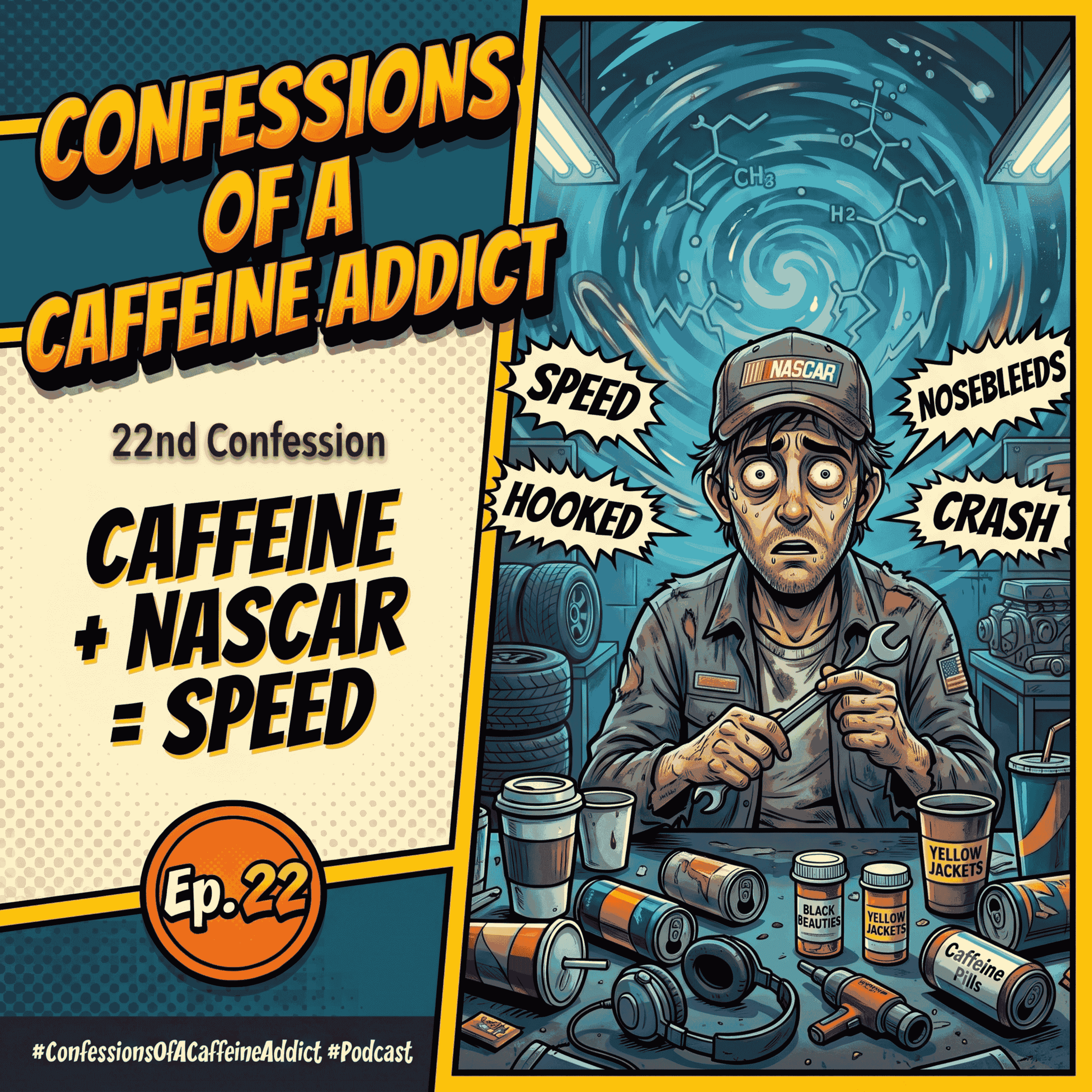
A NASCAR crew chief's caffeine addiction started with stolen "Black Beauties" from his father's garage at age 12, and it eventually cost him his marriage and nearly his career. This confession follows a decades-long escalation from swiped stimulant pills to a daily regimen of pills, coffee, and soda needed just to survive brutal race-team schedules. It exposes how nosebleeds, panic, and a pit-crew coach's tough intervention couldn't fully break the habit before it quietly cost him his family.
What You'll Hear in This Episode
- How a 12-year-old swiped a bag of "Black Beauties" caffeine pills from his NASCAR-driver father's garage, unknowingly starting a lifelong addiction.
- The rise from teenage stimulant use to becoming a sought-after crew chief who leaned on pills, coffee, and soda to survive grueling race schedules.
- The physical toll of high-dose caffeine at 30 versus 18, including racing heart rate, constant sweating, nosebleeds, and shrinking concentration
- How a hired pit-crew coach exposed the dangers of the habit and forced a strict cutoff on caffeine after lunchtime.
- The devastating personal cost of chemical dependency, as exhaustion and disengagement at home ultimately ended his marriage.
- A relapse triggered by finding a co-worker's stash of concentrated caffeine pills, reigniting the shakes, panic, and nosebleeds all over again.
- The long road to lasting recovery through gradual caffeine removal, ginger ale as a substitute, and a disciplined diet and exercise routine
Key Takeaways
- Stimulant tolerance shifts dramatically with age, meaning the same dose that once felt exciting can become physically dangerous over time.
- High-pressure work environments, such as professional racing, can normalize and even encourage extreme caffeine dependence among employees.
- Caffeine withdrawal symptoms, including nosebleeds, mood swings, and low energy, often push addicts back into unsafe use patterns.
- Chronic caffeine overuse can quietly erode personal relationships long before it visibly damages physical health.
- Sustainable recovery often requires gradual reduction, dietary changes, and regular exercise rather than a single cold-turkey attempt.
Who Should Listen
- Anyone working in high-stress, high-stakes industries who relies on stimulants to keep pace with demanding schedules.
- Partners or family members are trying to understand how caffeine dependency can silently damage a marriage.
- Listeners are curious about how caffeine tolerance and side effects evolve differently with age.
- Anyone seeking a realistic recovery roadmap involving gradual tapering, diet, and exercise rather than quick fixes.
Resources & Links
🌐 Visit us at https://linktr.ee/UnwiredLife
📖 Confessions of a Caffeine Addict by Marina Kushner
📩 Share your own caffeine confession: https://linktr.ee/UnwiredLife
🛒 Live Unwired Media : LiveUnwired.org
Transcript
One day, when I was 12, I went into my dad's race car garage and into his private office. Rummaging through his desk, I found a large Ziploc bag filled with hundreds of black and yellow capsules. My dad was a race car driver in the NASCAR series, and a fan had given him a little more speed. These highly concentrated caffeine capsules were known in those days as Black Beauties. I secretly filled my pocket, knowing that my dad would never miss a few off the top. Listen, we all talk about the grind, but most of you are subsidizing your hustle with a chemical loan you can't pay back. In this new series, Unwired, we aren't just talking theory. We're going into the dirt with 40 anonymous stories of people who thought they were using caffeine to be superheroes, only to realize it was the very thing dismantling their health and their marriages. This is the case study of the hidden tax on your ambition. This is the case study of speed in a sport that already runs on adrenaline. Welcome back to Live Unwired. Real stories from real lives transformed by one everyday drug most of us barely even question. This 20-second confession is called Caffeine NASCAR Speed. It starts in a race car garage with a 12-year-old kid rummaging through his dad's private office, finding a Ziploc bag stuffed with hundreds of black and yellow capsules. His father is a NASCAR driver. A fan has given him a little more speed. The pills are high-powered caffeine caps known as Black Beauties. He pockets a handful, certain his dad will never miss them. Within days, he's feeling his scalp crawl, his body buzzing, his confidence surging. Black Beauties and Yellow Jackets are just the beginning. As over-the-counter pills like 357 Magnums hit the market, he's already hooked. Growing up in that racing shop, he learns everything about building cars and eventually becomes a sought-after racing expert and crew chief under constant pressure and brutal schedules— early mornings to late nights at the track. To keep up, he builds his day around caffeine. A pill to start, coffee in the middle, soda to fill the gaps, and more pills in the evening. He even tells himself he's being responsible by not taking it to the next level with cocaine, crack, or meth. Then the bill comes due. Nosebleeds in the morning, massive headaches whenever he tries to lay off caffeine for a day. Any day not caffeine-assisted means mood swings, frustration, and an energy level close to zero. He convinces himself that shifting pills to the afternoon will fix it. He's wrong. Evening doses keep him awake past midnight, wreck his sleep, and make him late to work with a toxic disposition. Mechanics and engineers he recruited sit idle for hours without direction. They complain. Eventually, they quit. He blames the pills but doesn't stop taking them. At 30, the same doses hit differently, than they did at 18. The scalp crawl is gone, replaced by a racing heart, yawning, sweating at all hours, never knowing when he'll crash or forget a critical task in a business where a loose bolt can kill a driver or crew member. He tries to cut caffeine out several times, always failing in the same way. His wife brings home caffeine-free drinks. His body rejects them. He can't stay awake during the day. He can't sleep at night. Nosebleeds become constant. The mood rollercoaster speeds up. On days off, and even on vacation, he sits on the beach working on his computer, unable to relax, thinking time is wasted if he isn't working. Meanwhile, caffeine-laden sodas, energy drinks, coffee, and straight-up caffeine supplements are everywhere in auto racing. Sponsored by major companies. One crew member's entire job is to keep cold caffeine within reach at the track. When you're working in 90-degree heat with adrenaline at 100%, turning it down feels impossible. Then the race team hires a pit crew coach, a man whose job is to choreograph pit stops, enforce workouts, and design proper nutrition. He teaches the crew chief something he's never heard: how caffeine really affects the body, and why cold turkey isn't the only way to rein in the beast. His rule is simple and strict: lunchtime is the cutoff for all caffeine. After 1 PM, only water. No juice, no soda, no pills. Morning coffee or soda must be kept to a minimum. He treats the pills as reckless, calling the crew chief's behavior irresponsible and insisting they go. The crew chief follows the plan, but the timing is brutal. It's too late to save his marriage. As a father of 2 small kids, the only hours he has with his family are after work. Even then, caffeine robs him of everything that matters— baths, bedtime stories, real conversation at night. He falls asleep after one page of a children's book or in the middle of the most pivotal moment of a talk with his wife. Looking and feeling like an uncaring ass. Eventually, work and sleep are the only 2 things left in his life. His wife divorces him. He'll stay off caffeine pills for 8 years and off caffeinated drinks for about 5, following the nutritionist's advice. It's not a smooth road. One day, he finds a bottle of concentrated caffeine pills in a coworker's toolbox and falls off the wagon hard, taking every pill 2 at a time, day after day, while the coworker stays silent. The old symptoms return: shakes, panic, nosebleeds. He comes to believe caffeine addicts deserve the kind of help people get in Alcoholics Anonymous or Narcotics Anonymous, because for him, one cup of coffee can lead straight to cold soda and off to the races again. The only remedy that works is gradual removal of caffeine and relentless diligence in keeping it out. Ginger ale becomes a psychological ally, tricking his brain into feeling like he's having the bad stuff without the drug. If he avoids caffeine for a week or two, the headaches subside, his days smooth out, and his energy stabilizes. Proper diet— vegetables, fish, chicken, fresh fruit— water, and exercise become the only drug that truly works for him and for his relationships. He still remembers the fan who told his dad those pills would make him go even faster, and his father quietly leaving the Black Beauties untouched in a drawer. He wishes someone had thrown them away, or that he'd been punished for swiping them. Instead, he had to learn the hard way that caffeine, too, can be a deadly kind of speed. This episode is brought to you by Live Unwired, liveunwired.org, a community helping people reclaim natural energy, deeper sleep, and real peace of mind without leaning on stimulants. liveunwired.org is the home base for this show and the gateway to 3 core resources from the Adrenal Foundation: The Truth About Caffeine, The Truth About Coffee, and Confessions of a Caffeine Addict: 40 True Anonymous Stories That Inspired This Series. Together, these 3 books give you the science, the lived experience, and the practical insight you need if you're ready to step out of the burnout loop and explore life with less or no caffeine. And if you recognize yourself in the edges of this story, you'll find support waiting at liveunwired.org. Now settle in for Confession 22: Caffeine plus NASCAR equals speed. Caffeine plus NASCAR equals speed. One day, when I was 12, I went into my dad's race car garage and into his private office. Rummaging through his desk, I found a large Ziploc bag filled with hundreds of black and yellow capsules. My dad was a race car driver in the NASCAR series, and a fan had given him a little more speed. These highly concentrated caffeine capsules were known in those days as Black Beauties. I secretly filled my pocket, knowing that my dad would never miss a few off the top. I will never forget the next few days, zipping around the school with my scalp crawling all over my head. This was my introduction to caffeine, and in such a concentration, it made me feel unstoppable. It would be years before I would force myself to step back and look at the effects that this drug had on my day-to-day life. The Black Beauties and the Yellow Jackets were just the beginning of the ride. As over-the-counter pills like .357 Magnums came on the scene, I discovered that life was made easier and the day extended to accommodate whatever I needed. Growing up in a NASCAR racing shop meant that I would be exposed to all aspects of car building and ultimately would become a racing Jedi. By the time I was 30, the biggest teams and the best drivers were seeking me out to reproduce the success that I had achieved for my father. Running a race team is constant pressure with tight schedules requiring the crew chief to be on site all the time from early morning until late at night, and that required a constant steady dose of caffeine. I started my day with a pill, filled in the middle with coffee, and then had soda, followed by another couple of pills in the evening. It is ironic that I always felt that I was being responsible for not taking this harmless drug to the next level— cocaine, crack, and meth. A few doses of caffeine a day seemed totally acceptable for my body for several years. That is, until the bill came due. I started to wake up in the mornings with nosebleeds, and this continued regularly. I could not figure out why this was happening until I decided to lay off caffeine for a day or so. This caused the nosebleeds to stop but produced massive headaches that would only stop after downing a few sodas or coffee. Any day that was not caffeine-assisted was a bad day that consisted of mood swings, feelings of frustration, and an energy level that was next to none. I decided that since the nosebleeds were mainly in the morning, a few NoDoz or 357 Magnum pills taken at the right point in the afternoon would be okay. I was very naive in this line of thinking. My body was put through the wringer by the steady amount of caffeine over the years, and a dose taken early evening meant that I would not get to sleep until after midnight, and that sleep was no longer sound. I could no longer awaken at my usual time and arrived at work incredibly late and with the worst disposition. Star mechanics and engineers who I'd personally recruited to our race team spent hours without direction. Soon they started to complain and eventually quit because of the double standard I had begun to lay down. The entire day was about overcoming the consequences of oversleeping and arriving 2 hours late, trying to lose the feeling of being too tired to work and longing for a boost. Cars were no longer prepared to win. I blamed all of this on the high-powered caffeine pills that I took, although I was smart enough to see that anything in such a high concentration could not be good for my body, no matter how good it made me feel. This realization did not make me stop taking caffeine pills, as I was both physically and mentally addicted. Taking the same amount of caffeine at the age of 30 produced very different effects than it did at 18. My scalp no longer crawled, but my heart was racing at an incredible rate, and I yawned and sweated at all hours of the day, never knowing when the crash would happen. My concentration shrank to nothing, leaving tasks incomplete and forgotten in the business where loose bolts could equal death to a driver or crew member. And this was unacceptable. I tried to cut caffeine out of my life several times, always with the same failed result. My wife used to buy caffeine-free drinks in an effort to do her part, but my body or mind rejected all of these products as unpalatable. I even felt insulted that I was not allowed my choice of drink. The time soon came when rock bottom was in sight. I could not stay awake during the day and could not sleep at night. Nosebleeds were constant and the mood roller coaster was never faster. Vacation time or weekends were a nightmare. This was the only time I could wake up early. Upon getting a good blast of caffeine, I was in a panic feeling as if this time was going to be wasted if I did not do some sort of productive work. My body shook the entire day. My wife asked why I was so wound up on weekends and could not relax on my days off or even on vacation. I could not answer that question. I was the only person sitting on the beach doing work on my computer, and I did not see anything unusual with that. My life had become a slave to the drug that no one warns you about in high school or on TV. Moreover, companies pushing caffeine-laden soda, energy drinks and coffee, even straight-up caffeine supplements, heavily support and sponsor the sport of auto racing. There's a person on each team who has the specific job of making sure that cold caffeine is iced down and within reach of the crew competing at the track. There's no way that your body's going to turn this down when you are working in 90-degree heat at the— Quick pause for a second. If you're hearing yourself in this book, I built 2 things to go deeper than this audiobook can. First, there's Unwired, a caffeine cessation app where you can track your own withdrawal timeline, sleep, mood, and crashes day by day. And inside Unwired, you can work one-on-one with a coach who actually understands caffeine addiction and will walk you through a real plan instead of you guessing alone. The waitlist link is at the very top of the description. Second, there's the Unwired podcast built around 40 real caffeine case studies. Students, parents, founders, night shift workers walking through the same crashes you're hearing about right now. The link is right next to the app. If you want more than information, if you actually want a plan, a coach, and stories that feel like yours, hit those links, then come right back. Track and your adrenaline is at 100%. No way. One day, a gentleman came into my life who finally made a difference. Our race team had hired a pit crew coach who was also a world-class nutritionist from the National Football League. His job was to choreograph the pit stop moves, implementing a rigorous workout schedule, and make sure that every member of the crew, including the crew chief, maintained a proper nutritional regimen. He explained to me a lot about caffeine that I had never known, and the difference between stopping cold turkey and successfully reining in the beast. His advice was to use lunchtime as a cutoff point for all caffeine-containing drinks, period. The only fluid to be consumed after 1 PM was water. No juice and no caffeine in any form. He had no patience for the pills, calling my behavior very irresponsible. He said the pills had to go. The morning soda or coffee was needed in the short term for weaning, but it was to be kept to a tolerable minimum. Under no circumstances was caffeine to be introduced after lunch. I followed this advice and lived through the headaches, but it came too late to save my marriage. One of the side effects of this advice meant that in the evening when my body was out of fuel, it stopped. As a father of 2 small kids, the only time I had available to spend with my family was after my workday was done. Being a good father and husband meant being available for baths, bedtime stories, and intelligent late-night conversation. This drug robbed me of all that. Sleep came hard just after reading one page of a kid's book or during the most pivotal point of a conversation, leaving me looking and feeling like an uncaring ass. The bill was due once more. Work and sleep became the only 2 things in my life, and that is very sad when there is a family and small kids involved who no longer have access to their father. We were divorced soon after that. Anyone who dismisses caffeine addiction as less harmful or addictive as other drugs or alcohol is either very stupid or an addict himself. I have now spent 8 years off caffeine pills and about 5 years off caffeine-laden drinks thanks to the nutritionist's advice. One day I found a bottle of highly concentrated caffeine pills in the toolbox of a coworker and immediately fell off the wagon. I found an excuse to borrow tools or whatever it took to take every pill that was left in the vial, 2 at a time, day after day. To this day, I still wonder what his thoughts were and whether this is the reason that we do not work together anymore. I find that my body responds to caffeinated drinks the same way a body does when it is addicted to any other substance. A single soda can be consumed in about 30 seconds, and the brain will block all memory that it was ever consumed, leaving me with the feeling that it was so tasty and another should be opened immediately. Day after day, the only liquid I consumed were cans of soda from a 12-pack that I drank one after another. I can only imagine the amount of carbohydrates and sugar that I consumed during one of these binges. Then the same old telltale symptoms such as shakes, feelings of panic, And even the nosebleeds came back. I think it is sad that there is no mainstream help such as Alcoholics Anonymous or Narcotics Anonymous readily available to the many professionals who must be out there feeling like they must complete their life's work today, never realizing that this is an unobtainable goal set by caffeine speed pills and an underlying panic that is always present. Make no mistake that like cocaine or alcohol, this drug can come back hard and fast at any moment. It only takes a large cup of coffee to lead to a cold soda, and then we are off to the races. Whoo! The only true remediation was to slowly remove caffeine from my life and then remain diligent in keeping it out. Ginger ale and tonic water with lime have become good friends and trick my body and brain into feeling as if I am consuming the bad stuff. I have discovered that if I'm able to keep the caffeine out for more than a week or two, the headaches start to subside and I can get through my day smoothly and maintain a certain amount of consistent energy. A proper diet of vegetables, fish, chicken, and fresh fruit helps immensely, along with drinking lots of water. You always hear about the benefits of a good exercise plan, and it is very true. This is the drug that really works for you and your marriage. The gentleman who had given my dad the big bag of caffeine capsules remarked that even though he was a fast race car driver, this stuff would make him go even faster. My dad accepted the gift but left the bag buried in his desk drawer and never touched those pills. He said he just did not need them. The Black Beauties stayed in the drawer until I found them, and had consumed all but the last one. My dad never said a word about where they disappeared to or who had taken them. He had warned me years before of the danger that this kind of stuff presents. In hindsight, I wish that my dad had confronted me and punished me for swiping these pills, or better yet, thrown the entire lot into the garbage. He trusted caffeine pills because they weren't hard drugs, never realizing they were pulling his life apart in quieter but very real ways. Nosebleeds, panic, lost staff, and a marriage worn down by exhaustion and absence. Auto racing culture told him caffeine was part of the job. It took a pit crew coach and years of struggle for him to see that the job and the drug didn't have to be fused. If your workplace normalizes stimulants— coffee, pills, energy drinks— as the cost of doing business, this confession is a reminder that biology doesn't care about culture. Your nervous system, your relationships, and your long-term health still pay the price. To learn more about caffeine use disorder and hear from others stepping back from high-octane habits, visit liveunwired.org. If you made it this far into The Truth About Caffeine, you already know this isn't just about coffee. It's about your nervous system, your sleep, your anxiety, and your life. If you don't want to do this alone, that's why I built Unwired. Inside the Unwired app, you can log your last caffeine use, track withdrawals, sleep, mood, and energy over days and weeks. See your own nervous system reset instead of hoping it's working, and get matched with a coach for one-on-one training so you're not white-knuckling this by yourself. Alongside that, the Unwired podcast walks through 40 real caffeine case studies, people who went from just coffee to energy drinks and pills, and then back out. You'll hear their mistakes, relapses, and what actually worked. Both links are at the top of the description. Join the Unwired app waitlist for coaching and tracking. Listen to the Unwired podcast. Save this audiobook, send it to one person who needs it, and if you're stuck in that daily 2 PM crash, come do this with us inside Unwired, not just in your head.