Episode 29 · Duration: 14:10
About this episode
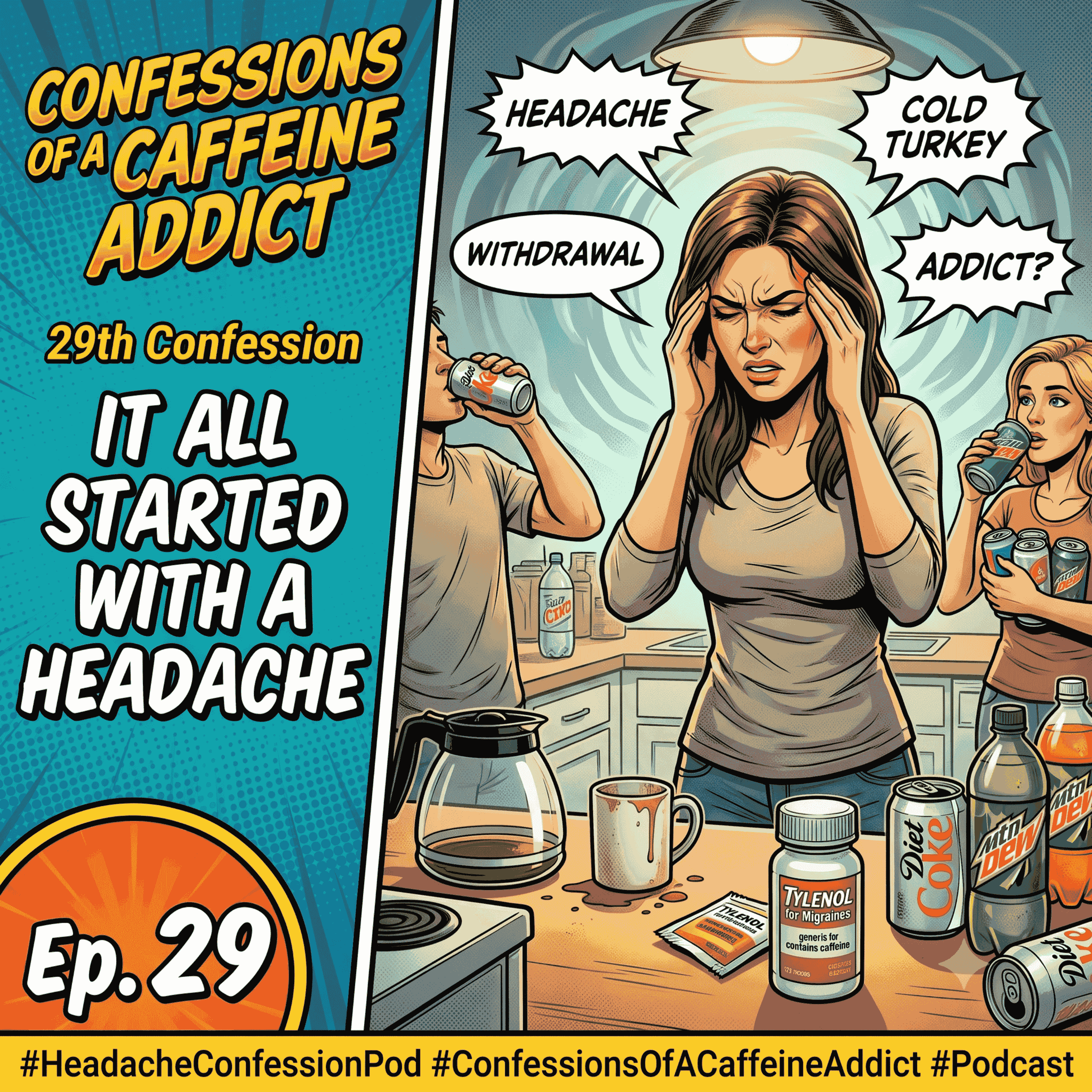
A simple household mishap—running out of coffee on a Thursday morning—became the spark for two confessions of caffeine dependency neither spouse wanted to admit. "It All Started with a Headache" follows a wife and her ADD-diagnosed husband, Fred, as a two-day coffee shortage reveals just how deeply both are hooked, despite Fred's kidney stone condition demanding he quit entirely. What begins as a playful bet to go cold turkey together quickly turns into a battle of withdrawal headaches, short tempers, and reluctant self-awareness.
What You'll Hear in This Episode
- How running out of coffee for just two days exposed a hidden caffeine dependency in both spouses.
- Fred's use of caffeine to self-medicate his ADD instead of relying on prescription medication, despite a kidney stone condition doctors say demands he quit coffee entirely
- A friend's blunt callout during a headache-fueled visit: "Let's face it, we both are" addicts, delivered without judgment or hesitation.
- The wife's declaration to quit cold turkey, and her husband's skeptical, taunting response daring her to actually follow through.
- The brutal first days of withdrawal, including relentless headaches, exhaustion, insomnia, and snapping at her own daughter over nothing.
- Fred's continued coffee habit despite health warnings, dangling his mug just out of reach as a taunt during her withdrawal.
- The couple's shared realization that admitting a caffeine addiction is far harder than most people assume.
Key Takeaways
- Even a brief, unplanned break from caffeine can quickly reveal a dependency that's been ignored for years
- Health conditions like ADD and kidney stones can complicate caffeine withdrawal, as some people self-medicate with the very substance they need to quit.
- Friends and family often recognize caffeine addiction more readily than the person experiencing it.
- Withdrawal symptoms like headaches, irritability, and insomnia can strain relationships and disrupt daily functioning.
- Denial, humor, and defensiveness are common early reactions when someone is confronted about caffeine dependency.
Who Should Listen
- Couples or families where multiple members rely on coffee as part of a shared daily routine.
- Anyone using caffeine to self-manage conditions like ADD instead of prescribed treatment.
- Listeners who have been told by a friend or doctor to quit caffeine due to an existing health condition.
- Anyone curious what a realistic, unfiltered cold-turkey caffeine withdrawal actually looks like day by day.
Resources & Links
🌐 Visit us at https://linktr.ee/UnwiredLife
📖 Confessions of a Caffeine Addict by Marina Kushner
📩 Share your own caffeine confession: https://linktr.ee/UnwiredLife
🛒 Live Unwired Media : LiveUnwired.org
Transcript
For 2 weeks, I felt as if I were single-handedly keeping Tylenol in business, swallowing up to 8 pills a day. My headache was a constant companion. I was exhausted during the day and could not sleep at night. I was jittery, groggy, and had trouble concentrating. Through the haze, I could barely make out the grin of my Prince Charming holding a mug of coffee. Every morning I got up longing for a hot cup of coffee. It was hard to help the transition. Listen, we all talk about the grind, but most of you are subsidizing your hustle with a chemical loan you can't pay back. In this new series, Unwired, we aren't just talking theory. We're going into the dirt with 40 anonymous stories of people who thought they were using caffeine to be superheroes, only to realize it was the very thing dismantling their health and their marriages. This is the case study of the hidden tax on your ambition. This is the case study of how a soda habit turned into a full-blown stimulant dependency. Welcome back to Live Unwired. Real stories from real lives transformed by one everyday drug most of us barely even question. This 29th confession is called Soda Slave. It follows a man who starts by casually drinking cola to get through long days, then stacks on diet pills and more caffeine until his mood, memory, and body are all paying the price. What feels like harmless refreshment at first gradually becomes something he can't go a day without, no matter how jittery, sleepless, or unstable he gets. Soda Slave shows how easy it is to underestimate caffeine in sugary drinks, how quickly tolerance grows, and how hard it is to admit you're addicted when the drug is sold in every grocery aisle and break room. It's a reminder that dependence doesn't always look like needles or bottles, Sometimes it looks like a vending machine you visit every hour. This episode is brought to you by Live Unwired, liveunwired.org, a community helping people reclaim natural energy, deeper sleep, and real peace of mind without leaning on stimulants. liveunwired.org is the home base for this show and the gateway to 3 core resources from the Adrenal Foundation: The Truth About Caffeine, The Truth About Coffee, and Confessions of a Caffeine Addict: 40 True Anonymous Stories That Inspired This Series. Together, these 3 books give you the science, the lived experience, and the practical insight you need if you're ready to explore life with less or no caffeine. And if you recognize yourself in the edges of this story, you'll find support waiting at liveandwired.org Now settle in for Confession 29: Soda Slave. It all started with a headache. We ran out of coffee on a Thursday morning. Confirmed coffee swillers, my husband and I were aghast. How were we going to make it through the morning? My husband Fred suffers from ADD, attention deficit disorder, and self-medicates with caffeine. He claims it keeps him focused and helps to combat the debilitating effects of this condition without having to rely on prescription drugs. Mr. Awesome poured the last half cup that was left in the pot from the previous morning and chugged it down. Don't worry about me, darling, I muttered. I'll manage somehow. By afternoon, I had a slight headache, which I attributed to sinus pressure. The day wore on, and I decided to take a decongestant and go to bed early. Friday morning, the headache was still there. I staggered downstairs and was searching through the cupboards for coffee when Fred came down the stairs. Did you make the coffee yet? My husband sped through the kitchen looking more morning stressed than usual. Did you get any? No, didn't you? We looked at each other panic-stricken. After a liberal exchange of blame, we both promised to buy some on the way home. He left for work, grabbing a Diet Coke and 2 Mountain Dews on the way. I had a meeting that morning and no time to buy coffee. Since I don't drink diet soda or Mountain Dew, I hoped fervently I'd be able to score a cup of coffee at the meeting. I was out of luck, however. The only coffee there was on the breath of the woman sitting next to me. By 11 AM, my head was pounding so hard that I couldn't think. After the meeting, I went to my friend's house rather than go home to the mountain of laundry waiting for me. Joanne was slamming her 4th Mountain Dew of the morning. I begged 2 acetaminophens and grabbed a cookie from the package on the counter. Raunching away, I felt compelled to comment, I don't know how you can drink that stuff. Well, I like my coffee cold and carbonated. She stated, yeah, well, I haven't had any caffeine for 2 days now. We've been out of coffee and I don't do diet soda and that's all that's left. She noticed I was rubbing my temples. You know, that's probably what's causing your headache— caffeine withdrawal. I laughed. You can't get addicted to caffeine. Ho ho ho ho. She didn't laugh. Sure you can, Joanne said. It's a drug, you know. You make me sound like an addict, I said. Well, let's face it, we both are. I am not an addict. At least I admit it. Later, on my way out the door, I snagged a Coke from Joanne's fridge and drank it on the way home. Half an hour later, my headache was gone. Could I really be addicted to caffeine? The next morning was Saturday. Fred made a pot of coffee and poured himself a mug. I stopped him as he was pouring one for me. I'm going cold turkey. You're kidding, right? he asked. Nope. You should quit too. You know it's not good for you. Fred has kidney stones. He has endured lithotripsy, and when that failed to dissolve it, he had surgery. Doctors told him to quit drinking coffee. He cut down for a while, but soon went back to drinking 6 or 7 cups a day. Yeah, and pigs should fly, but they won't, he retorted. You won't either— quit, that is. That sealed the deal. I would show him. However, I underestimated the power caffeine had over me. By the 3rd day, I had one nerve left, and my family was on it. Why are you yelling so much all of a sudden? My daughter wanted to know. Why are you such a pain all of a sudden? I countered. My darling husband sauntered through the kitchen with a large cup of coffee. I would have killed just for a sniff, but he held it tantalizingly out of reach. So how's that no caffeine thing working out for you? He smirked. If I could focus, I would answer him. For 2 weeks, I felt as if I were single-handedly keeping Tylenol in business, swallowing up to 8 pills a day. My headache was a constant companion. I was exhausted during the day and could not sleep at night. I was jittery, groggy, and had trouble concentrating. Through the haze, I could barely make out the grin of my Prince Charming holding a mug of coffee. Every morning I got up longing for a hot cup of coffee. It was hard. To help the transition, I switched to tea, rationalizing that it had less caffeine than coffee. Gradually, I switched from caffeinated to herbal tea. I had never realized how much caffeinated drinks are a part of our culture. Even though I had never thought that coffee tasted as good as it smells, commercials and my surroundings made me long for the taste. So many social situations revolve around the coffee pot. Quick pause for a second. If you're hearing yourself in this book, I built 2 things to go deeper than this audiobook can. First, there's Unwired, a caffeine cessation app where you can track your own withdrawal timeline, sleep, mood, and crashes day by day. And inside Unwired, you can work one-on-one with a coach who actually understands caffeine addiction and will walk you through a real plan instead of you guessing alone. The waitlist link is at the very top of the description. Second, there's the Unwired podcast, built around 40 real caffeine case studies— students, parents, founders, night shift workers, walking through the same crashes you're hearing about right now. The link is right next to the app. If you want more than information, if you actually want a plan, a coach, and stories that feel like yours, hit those links, then come right back. Went to friends' houses and the first thing they asked me was, do you want coffee? Waitresses would automatically pour it into my cup. And the church on Sunday mornings, everyone stood in the kitchen pouring, creaming, stirring, and sucking down that life-giving fluid. When I announced I had given up caffeine, they looked at me like I was crazy. People who knew me best were pessimistic about my success. Haha, you'll be back. You won't hold out for long. I didn't understand why at the time, but people seemed to want me to fail. Somehow my decision to give up caffeine was threatening to their own addiction they didn't want to admit. In the middle of my ordeal, my aunt came for a visit. A champion coffee drinker, she has been known to drink 3 pots a day. One day I noticed her teeth were a dull tan with darker brown lines running down. You know, I've been wondering about your teeth, I said. What happened to cause them to be discolored? Do you have a high fever that damaged the enamel? She looked puzzled before digging a compact out of her purse and examining her smile. Oh, this? It's nothing, just years of drinking black coffee. Any more in the pot? Hmm. As the days went on, the horrible throbbing headaches gradually lessened to a dull pain and then departed altogether. I slept better than I had in years. I was less irritable, more patient with my children and with Fred, the caffeine junkie. Old habits die hard. I still craved the taste of a hot cup of coffee sliding down my throat, especially in the morning. When I sat down with the paper, I immediately found myself wanting a cup of coffee. One morning, distracted by what I was reading, I poured myself a mug. I hadn't even realized it until I took a sip. Oh, what the heck, one cup won't hurt, I thought. It did. By afternoon, my stomach was roiling, my head ached, and I felt shaky. I thought I was going to be sick. That incident only strengthened my resolve. I made a habit to walk every morning, dragging myself as far away from the hypnotic spell of the coffee pot as I could. I was determined to break my dependence on caffeine. The crab I married was still steadfastly refusing to admit that quitting caffeine made sense. As he clutched his chest and belched one evening before reaching for the antacids, I made a disapproving noise. Oh, what's the matter? he snipped. You need one of these? No. I smiled sweetly. I feel great. That chamomile tea that I drank before bed did wonders. Oh, you're such a paragon of virtue, he snarled. I had struggled with ulcers and stomach pain since I was in college. Now I was finally able to give up Maalox. I used to crash in the afternoons, running for a cup of coffee to keep going. Now I had more energy. There were other benefits too. My neck and shoulders did not seem as tight. The pain caused by fibrous breasts lessened. I noticed that my mind was sharper, my writing was wittier, my checkbook balanced, and I didn't lose my car keys every other day. Fred and I were savoring a few quiet moments one afternoon when the love of my life shifted his considerable weight and whined, I think I gained a few pounds. Mm. Can you feel my pulse? My heart is racing. I think maybe I'm coming down with something. I think you have a bad case of caffeine overload. Putting down my book, I decided to confront him. Since I quit caffeine, I've started exercising and dropped 5 pounds. We can do this together. Come on, join me. Come over to the dark side where there's no French roast? Never. Then while we slept, Mother Nature, in a fit of pique, buried us under a mound of snow. The kids, overjoyed with a snow day, went back to bed. Down the stairs trundled the grumpy bear who shared my bed. He poured water into the coffee maker, put grounds into the filter, and hit the on button. Nothing happened. He tried again. He unplugged and replugged the coffee pot. Nothing. He roared and reached for a soda. The kids had drunk it all the night before. Mm-hmm. He stood there like a druggie who needed a fix. Looking out the window as if the solution lay outside, his gaze lit on our car buried under the snow. The horrible truth sank in. There would be no caffeine for him that day. By 8 o'clock, he was in bed, a quivering mass. The next morning, my darling leaned over and said in a sultry whisper, can I join you for your morning walk? When we got back, we had a cup of tea together. There might be hope for him yet. Soda slave is more than a catchy phrase. It's a description of someone whose mood, health, and daily routine revolve around vending machines and cans. Each drink feels harmless. Together, they form a dependency that affects sleep, digestion, weight, and emotional stability. If you've ever felt uneasy seeing the recycling bin filled with cans or noticed that you can't focus until you've had your soda, this story invites you to see that pattern as more than preference. You can find practical tips for reducing both sugar and caffeine, plus more anonymous confessions, at liveunwired.org. Even swapping one soda a day for water or herbal tea can start shifting your body's expectations. If you made it this far into The Truth About Caffeine, you already know this isn't just about coffee; it's about your nervous system, your sleep, your anxiety, and your life. If you don't want to do this alone, that's why I built Unwired. Inside the Unwired app, you can log your last caffeine use, track withdrawals, sleep, mood, and energy over days and weeks. See your own nervous system reset instead of hoping it's working. And get matched with a coach for one-on-one training so you're not white-knuckling this by yourself. Alongside that, the Unwired podcast walks through 40 real caffeine case studies, people who went from just coffee to energy drinks and pills and then back out. You'll hear their mistakes, relapses, and what actually worked. Both links are at the top of the description. Join the Unwired app waitlist for coaching and tracking. Listen to the Unwired podcast. Save this audiobook, send it to one person who needs it, And if you're stuck in that daily 2 PM crash, come do this with us inside Unwired, not just in your head.